
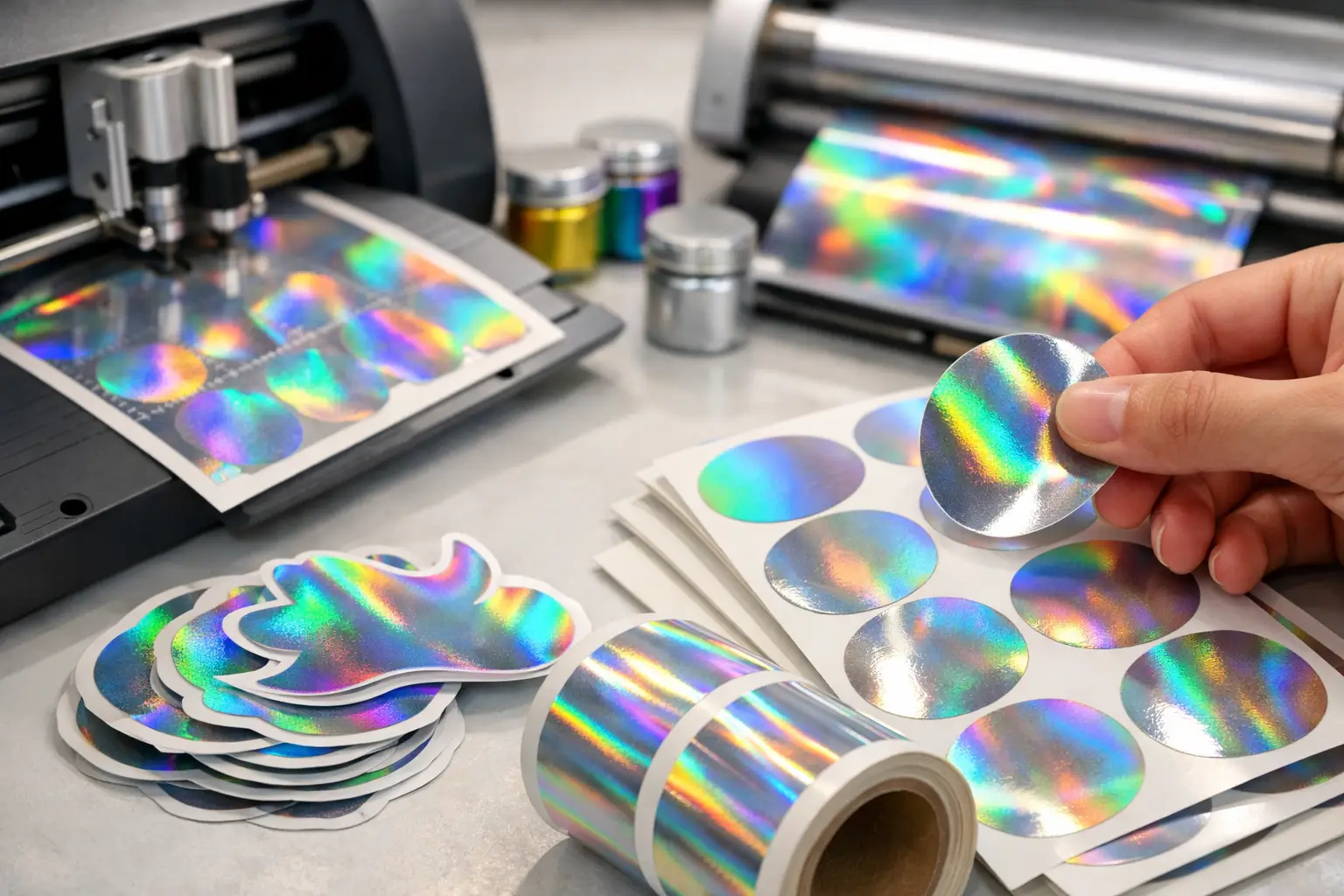
A plain sticker can do the job. A holographic sticker gets noticed before anyone’s read a word. That’s why holographic sticker printing Australia businesses use for launches, merch, packaging and promos keeps gaining ground – it adds movement, shine and a premium feel without blowing out the budget.
The trick is getting the effect right. Holographic stock can make a design look incredible, or it can fight with your artwork and leave the message harder to read. If you’re ordering for a brand, event, club, product line or one-off promotion, the smart move is knowing where holographic works best, what to watch in the design stage, and how to avoid paying for a finish that doesn’t suit the job.
Why holographic stickers keep selling
Holographic stickers have one big advantage over standard paper or vinyl options – they create visual movement. As the light shifts, the surface changes. That makes them feel more premium and more tactile, which is exactly what many brands want when they’re trying to stand out on crowded shelves, laptops, drink bottles, satchels or event handouts.
For small businesses, that extra impact matters. If you’re selling candles, streetwear, skincare, coffee, tools or artist merch, packaging has to work harder than ever. A holographic finish can make a simple logo feel elevated. It can also turn a low-cost promotional giveaway into something people actually keep.
That said, holographic is not automatically better. If your brand leans minimal, corporate or highly regulated, a softer finish like matte or clear might suit you better. The best print choice is the one that supports the message, not the one with the most flash.
Holographic sticker printing Australia brands use most
In practice, holographic stickers are popular because they fit plenty of use cases without needing a complete redesign. They work especially well for retail packaging, limited-edition runs, event branding, club decals, beauty products, creator merch and promotional handouts.
They also punch above their weight for seasonal campaigns. If you need something to look special for a short run – product drops, festival packs, conference bags, EOFY promos or market stalls – holographic stock can give a standard sticker shape a more premium presence.
For trades and service businesses, it depends on the application. If the goal is hard-working branding on toolboxes, utes or equipment, durability and readability usually matter more than novelty. A holographic sticker can still work, but the artwork needs to be bold and clean. Tiny text and low-contrast logos can disappear once the reflective finish starts doing its thing.
What makes a holographic sticker look good
The best holographic sticker designs are simple enough to stay clear and strong, but not so plain that the finish feels wasted. You want the effect to support the artwork, not overpower it.
High-contrast designs usually perform best. Dark ink over holographic stock often creates sharp, eye-catching results. Strong outlines, solid shapes and confident typography tend to hold up well too. If your artwork is very detailed, overly pastel or packed with fine text, the shimmer can reduce legibility.
This is where proofing matters. A specialist sticker printer should be able to flag problems before production, especially if your file needs tweaks for cut lines, bleed or print clarity. That’s a big deal when timing is tight and reprints are not on the table.
Artwork choices that usually work
Bold logos, mascot-style graphics, custom illustrations and limited colour palettes often suit holographic stock nicely. White ink layers can also be useful if you want some parts of the design to block the holographic effect while letting other areas shine through.
That creates contrast and gives you more control. For example, you might keep your logo crisp with a white base while leaving a background pattern or border exposed for the holographic finish. That tends to look polished instead of chaotic.
Artwork choices that need more care
Photographic designs, fine gradients and tiny legal text can be harder to pull off. They’re not impossible, but they need proper setup and realistic expectations. If the sticker’s job is mainly informational, holographic might not be the strongest option.
A lot comes down to viewing distance. A sticker on product packaging can carry more detail because it’s handled up close. A sticker for a car window, esky or event giveaway needs to read fast.
Choosing the right shape, size and finish
Shape changes the feel of a holographic sticker almost as much as the print itself. Die cut stickers are popular because they follow the edge of the design and feel custom straight away. They’re a strong option for logos, mascots and bold branded shapes.
Kiss cut stickers are handy if you want easier peeling, especially for retail packs, online orders or event handouts. Sticker sheets can also make sense if you’re producing sets, collections or multiple branding elements in one run.
Size matters more than people think. Very small holographic stickers can lose impact if the effect doesn’t have room to breathe. Oversized stickers, on the other hand, can look brilliant for packaging seals, promotional decals or merch, but only if the artwork is clean enough to carry the larger format.
Lamination and material durability should match the job too. If your sticker is heading onto packaging that stays indoors, your options are broader. If it’s going on drink bottles, hard hats, windows, laptops or outdoor gear, you’ll want a durable stock that can cope with wear, moisture and handling.
Fast turnaround matters, but so does getting it right
Most customers looking for holographic sticker printing Australia wide are not ordering months in advance. They’ve got an event coming up, a product launch around the corner, or stock that needs to go out now. Speed matters. But speed without support can create expensive mistakes.
A good printer doesn’t just hit print and hope for the best. They check artwork, communicate clearly and help you avoid obvious issues before production starts. That’s especially valuable for first-time buyers or anyone ordering a specialty finish for the first time.
Cheap print can look tempting until the cut is off, the colours look muddy, or the sticker turns up late and misses the campaign window. Fast turnaround is only worth paying for if the final result still looks sharp.
How to order with fewer headaches
If you want the process to run smoothly, start with the end use. Where is the sticker going, who’s handling it, and what does it need to achieve? Once you know that, decisions around size, shape, finish and quantity get easier.
If the sticker is meant to sell a product, focus on shelf impact and branding. If it’s for giveaways, think about peelability, durability and broad appeal. If it’s for vehicles or equipment, prioritise readability and toughness over decorative detail.
It also helps to be realistic about quantity. Small runs are great for testing, limited editions or one-off events. Larger runs usually bring better unit value, so if you already know the design has legs, it can be smarter to order ahead instead of topping up in a panic later.
And if you’re unsure, ask questions early. A specialist team like Sticker Ninja can usually tell pretty quickly whether your design is suited to holographic stock or whether another material would do the job better.
Is holographic worth it?
Usually, yes – when attention matters and the design suits the finish. Holographic stickers can make a brand feel more premium, help promotional material get kept instead of tossed, and add genuine visual punch to product packaging and merch.
But it depends on context. If clarity is everything, or your brand style is deliberately understated, another stock may be the better play. The goal is not to choose the loudest option. It’s to choose the one that makes your message land fast and look good doing it.
If you’re ordering custom stickers, don’t think of holographic as a gimmick. Think of it as a tool. Used well, it grabs attention, lifts perceived value and gives people one more reason to remember your brand after everything else has blended into the background.
Leave a Reply
You must be logged in to post a comment.