
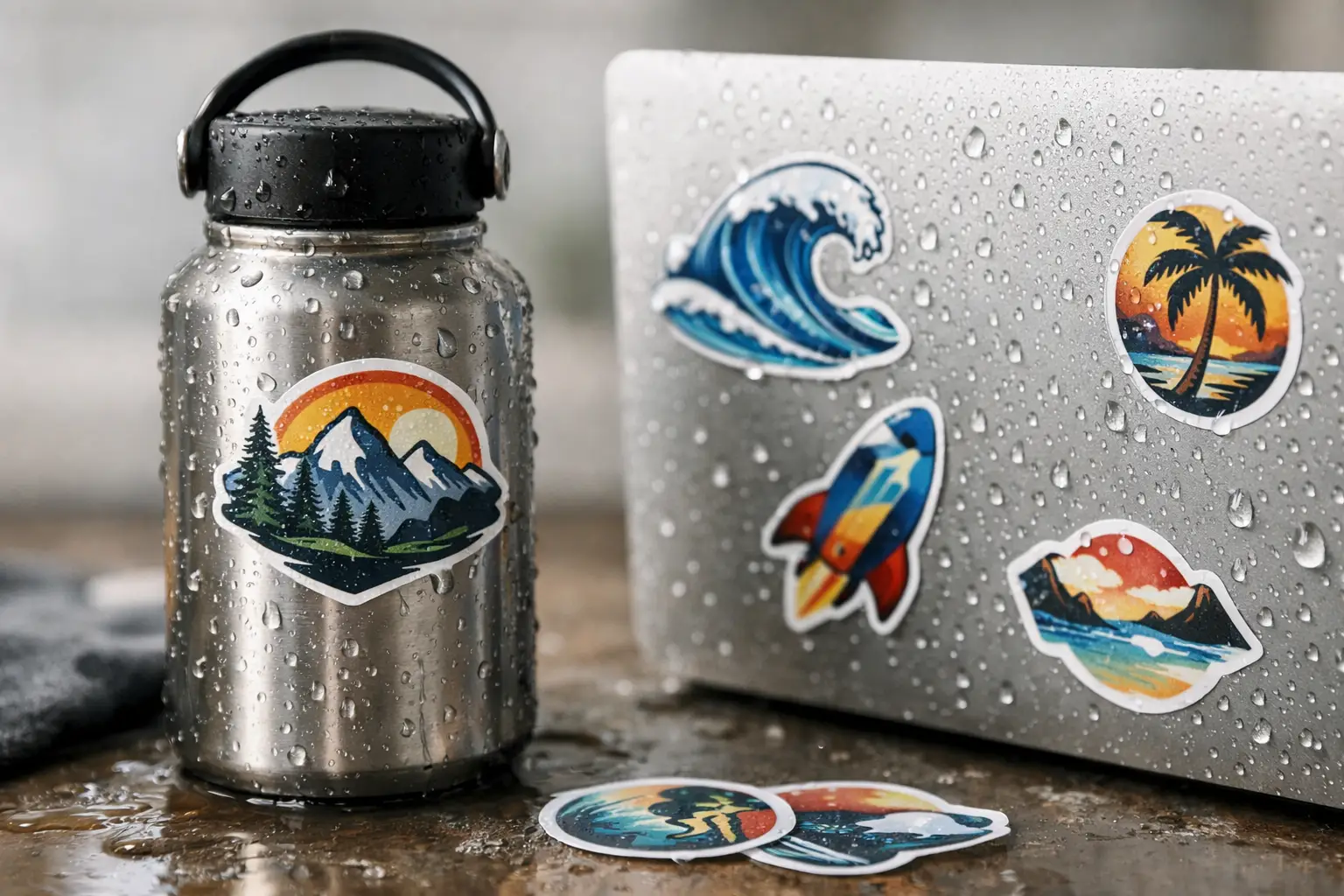
If you are ordering stickers for a ute, shopfront, eskies, product jars or event gear, one question matters fast – are vinyl stickers waterproof? The short answer is yes, usually. The better answer is that it depends on the vinyl, the ink, the adhesive, and whether the sticker is made for indoor use or for real outdoor punishment.
That distinction matters more than most people realise. Plenty of stickers look great fresh off the sheet, then curl, fade or turn grubby after a bit of rain, sun and handling. If you want stickers that actually hold up, you need more than “vinyl” slapped on a product page.
Are vinyl stickers waterproof or just water resistant?
Most quality vinyl stickers are waterproof enough for everyday use. That includes rain, splashes, condensation, hand washing and general outdoor exposure. If they are printed properly and paired with the right laminate or finish, they can handle a lot without falling apart.
But “waterproof” is often used a bit loosely. A basic vinyl sticker might survive water, but that does not automatically mean it is built for long-term outdoor use, harsh sun, constant abrasion or repeated dishwasher cycles. Water is only one part of the test.
For most business and event customers, the practical question is not whether a vinyl sticker can get wet once. It is whether it stays sharp, stuck down and professional-looking over time. That is where material quality makes the difference.
What makes vinyl stickers waterproof?
Vinyl itself is a tough material. Compared with paper stickers, it handles moisture far better and is much less likely to wrinkle, soften or tear when wet. That is the starting point.
After that, the construction matters. A proper waterproof vinyl sticker usually combines a vinyl face stock, durable adhesive, quality printing and often a laminate layer on top. That laminate acts like a shield. It helps protect the print from water, scratches, scuffs and UV exposure.
Without that full setup, a sticker can still be vinyl and still underperform. For example, if the print method is not suited to outdoor use, or the finish is too light for the job, the sticker may technically survive rain but still fade early or wear out around the edges.
That is why specialist sticker printers tend to ask where the sticker is going. A bottle label, a car panel and a laptop sticker do not all need the same build.
Where waterproof vinyl stickers work best
This is where vinyl earns its keep. Waterproof vinyl stickers are a solid option for packaging that may get damp, drink bottles, car windows, bumpers, toolboxes, hard hats, promotional gear, market stall signage and event branding. They are also popular for candle labels, food packaging, cosmetic jars and real estate applications where moisture resistance matters.
If your sticker is likely to be handled a lot, wiped down, kept in a fridge, used outdoors or exposed to the odd spill, vinyl is usually the safe choice. It gives you a cleaner, more durable result than paper and generally looks sharper for longer.
For businesses, that matters because a worn sticker does not just look tired – it reflects on the brand. If the label starts peeling after a week, customers notice.
When “waterproof” still has limits
Here is the no-fuss truth. Even the best vinyl stickers are not magic.
A waterproof sticker can still fail if it is applied to a dirty, oily or textured surface. It can struggle on low-energy plastics, heavily curved items or surfaces that flex constantly. If the sticker is exposed to pressure washing, harsh chemicals, salt spray or years of direct Australian sun, lifespan will vary.
Dishwasher use is another one people ask about. Some vinyl stickers can handle it better than others, especially with lamination, but repeated high heat and detergent are rough on any adhesive product. If you need stickers for drinkware or containers that get washed constantly, it is worth checking that the material is suitable for that specific use.
So yes, vinyl stickers are waterproof in a practical sense. But if your project has hard conditions, ask the better question: waterproof for what, exactly?
Are vinyl stickers waterproof enough for outdoor use?
Usually, yes – if they are made for outdoor use.
Outdoor vinyl stickers need more than water resistance. They need to cope with UV, heat, cold, dirt and daily wear. A laminated vinyl sticker is generally the better pick for cars, windows, site equipment, trailers and outdoor branding because it gives the print an extra layer of protection.
If you are ordering bumper stickers, tradie vehicle decals or promotional stickers that will sit in the weather, skipping durability to save a few dollars often backfires. Cheap stickers can look fine at first, then fade unevenly, shrink slightly or crack around the edges.
That is why Australian-made production and proper material matching matter. Our conditions are not gentle. A sticker that survives a cool indoor office is not the same as one stuck to a black ute in full summer sun.
Gloss, matte and clear – does finish change waterproof performance?
It can.
Gloss laminated vinyl stickers are a popular choice because they look bright, colours pop, and the laminate adds strong protection. Matte laminated stickers can still be durable and waterproof, but they give a flatter, more understated look. That can suit premium branding, product labels and designs where glare is a problem.
Clear vinyl stickers also work well in wet conditions when produced properly, but they need careful artwork setup and strong print clarity to keep the design readable. They are great for windows, bottles and packaging where you want the sticker to blend into the surface.
The finish is not just about looks. It affects how the sticker handles scratching, handling and environmental exposure. If the sticker is going into a high-contact setting, the right finish helps it last.
How to make sure your vinyl stickers actually last
The biggest wins happen before the sticker is even printed. Start with the surface. Clean it properly and let it dry. Dust, grease and moisture under the adhesive are a fast way to ruin a good sticker.
Then think honestly about use. Indoor handout stickers, jar labels and laptop decals usually need a different spec from fleet stickers, outdoor event branding or long-term product labelling. If your sticker is heading outdoors, ask for a material and finish that are built for that environment.
Application matters too. Smooth, clean, dry surfaces give you the best bond. If you apply stickers in cold, damp conditions or onto rough textures, you can get lifting at the edges no matter how good the vinyl is.
And finally, choose a specialist. This is one of those jobs where experience saves mucking around. A sticker-first printer will usually spot the problem before it becomes your problem.
So, should you choose vinyl?
If you need stickers that can handle water, look professional and hold up better than paper, vinyl is the obvious move. It is versatile, durable and suitable for a huge range of business, event and personal uses.
But not all vinyl stickers are built the same. Some are perfect for short-term promos and packaging. Others are made to go the distance outdoors. The trick is matching the sticker to the job instead of assuming every vinyl option will perform the same way.
That is exactly why customers come to specialists like Sticker Ninja. Fast turnaround is great. Sharp print is great. But getting the right sticker the first time is what really saves time, money and headaches.
If you are asking whether vinyl stickers are waterproof, you are already asking the right question. The next one is even better – what do you need them to survive? Once you know that, choosing the right sticker gets a whole lot easier.