
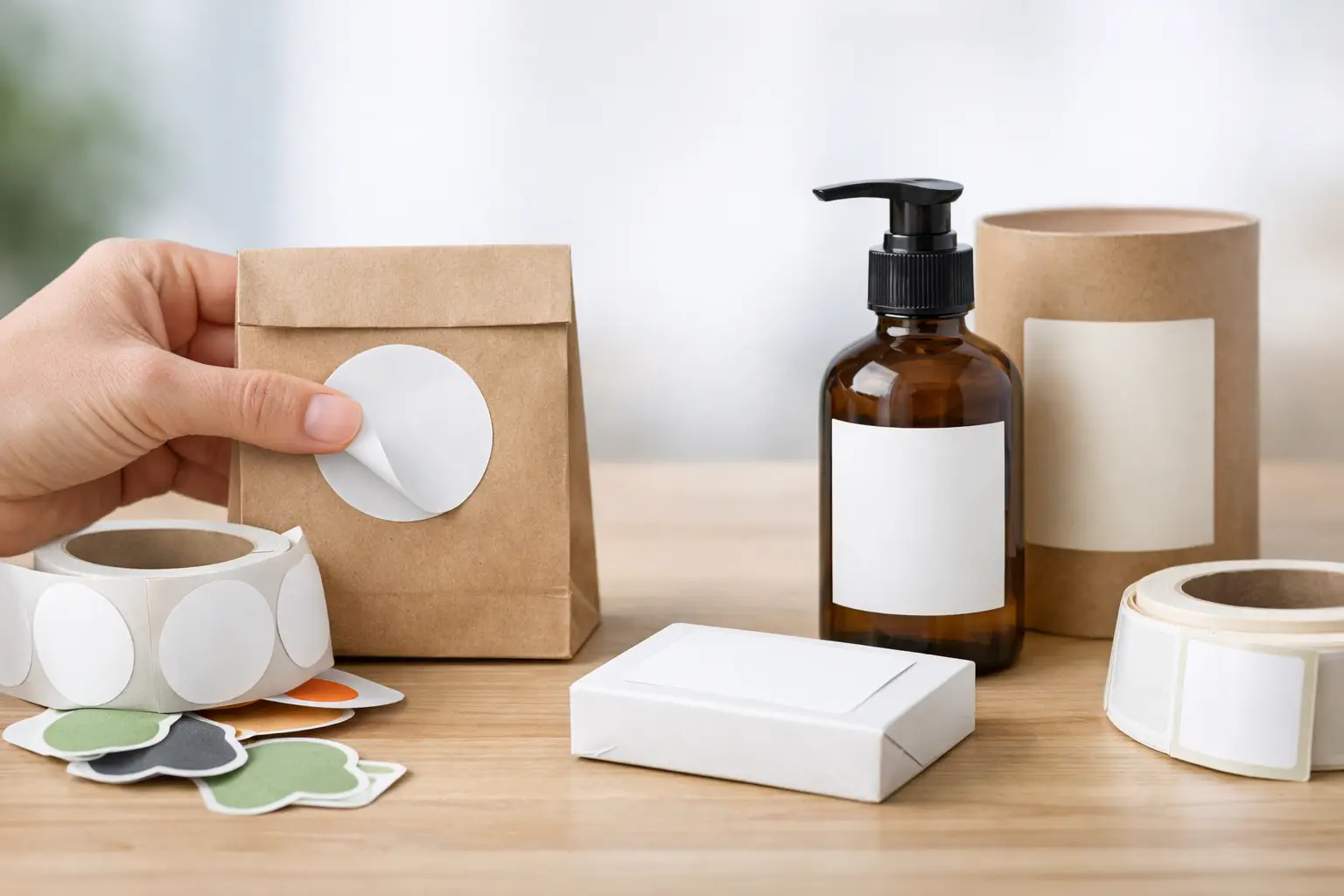
You have a product packed, boxed and ready to go, then the small detail slows everything down – do you need a sticker or a label? When people search stickers vs labels for packaging, they are usually trying to solve a practical problem fast: make the product look sharp, stay branded in transit, and avoid wasting money on the wrong print format.
The short answer is this: labels are usually built for product information and consistent application, while stickers are often chosen for branding, promotion and a bit more flexibility. But that split is not as neat as people make it sound. In real packaging jobs, the right choice depends on what the item is, where it is going, how long it needs to last, and what you want the customer to notice first.
Stickers vs labels for packaging: what is the actual difference?
A lot of businesses use the terms interchangeably, and fair enough. Both are adhesive printed products. Both can carry branding, product details and design elements. Both can go on jars, boxes, satchels, bottles, mailers and retail packs.
The difference usually comes down to purpose and production style.
Labels are generally more functional. They are commonly used for ingredients, barcodes, sizing, compliance details, product names, batch information and anything else that needs to be clear, consistent and easy to apply across a run of products. If you are labelling hundreds of candle jars, sauce bottles or skincare tubs, labels are often the cleaner choice.
Stickers lean more toward brand impact. They are great when you want stronger visual punch, custom shapes, promotional flair or a more premium unboxing feel. Think die cut logo stickers on shipping boxes, thank-you seals on tissue wrap, event merch, or branded extras tucked into orders. They are not just there to inform – they help sell the brand.
That said, stickers can absolutely be used as packaging labels, and labels can still look great. The line between them is not fixed. It is more about the job they are doing.
When labels make more sense
If your packaging needs to carry important product information, labels usually win on practicality. They are ideal when you need neat placement, readable text and repeated use across a product range. For food, cosmetics, wellness products, cleaning items and retail goods, labels are often the smarter call because they keep the pack compliant and professional.
Labels also suit businesses that need a streamlined packing process. If your team is applying the same design again and again, a label format can make the whole job faster and tidier. On small packaging, that matters. A bottle or jar does not give you much room for mistakes, and a format designed for fit can save a lot of frustration.
There is also the visual side. A well-designed label gives structure to the product. It tells the customer where to look first, where to find the fine print, and what the product is. For shelves, market stalls and ecommerce photography, that clarity counts.
When stickers are the better packaging move
Stickers come into their own when packaging needs personality. If you want your order to feel branded before the customer even opens it, stickers are hard to beat. A custom die cut sticker on a mailer, a clear sticker on wrapping, or a bold branded seal on a takeaway box can lift the whole presentation without redesigning the entire pack.
They are also a strong option when your packaging changes often. Seasonal ranges, short-run promos, event packs and limited editions all benefit from the flexibility stickers offer. You can update messaging, artwork or shape without committing to a massive print run of custom boxes or pre-printed packaging.
For smaller businesses, that flexibility is gold. You can use plain packaging and still make it feel fully branded with the right sticker setup. It is one of the easiest ways to get a polished look without blowing the budget.
Material, finish and durability matter more than the name
This is where the conversation gets more useful. Whether you call it a sticker or a label, the material and finish often matter more than the label attached to the product itself.
If the packaging will face moisture, oil, refrigeration or rough freight handling, you need an adhesive product that can hold up. A gorgeous print means nothing if the corners lift or the ink scuffs halfway through delivery. For takeaway, beauty, beverage, outdoor, automotive or warehouse use, durability is not optional.
Paper can work well for dry, short-life applications and can look great for artisan or handmade products. Vinyl is usually the stronger choice for durability, especially where water resistance and wear matter. Clear stock gives a cleaner, more premium look on bottles or glass. Holographic or specialty finishes can make branding pop, but they only make sense if they suit the product and audience.
Gloss tends to feel brighter and more vibrant. Matte can feel more refined and easier to read under strong light. Neither is automatically better. It depends on your brand, your artwork and where the packaging will be seen.
Cost: cheaper upfront is not always cheaper overall
If you are choosing purely on unit price, you can end up making packaging harder than it needs to be. A cheaper option that slows down application, looks average in photos, or fails during shipping can cost more in the long run.
Labels are often the efficient choice for high-volume product lines because they are built for repeat use. Stickers can be more cost-effective for short runs, promotional packaging or brands that want one format to do multiple jobs. A branded sticker can seal tissue paper, decorate a box and work as a bonus giveaway if the customer peels it off and keeps it.
That extra perceived value matters. Packaging is not just about getting the item out the door. It shapes how professional your business looks and how memorable the order feels when it lands.
How to choose the right option for your packaging
Start with the job, not the terminology. Ask what the adhesive print needs to do.
If it needs to carry mandatory product information, fit neatly on a specific container and be applied consistently across a production run, you are probably looking at labels. If it needs to boost branding, add flair to shipping packs, work across changing campaigns or create a stronger customer experience, stickers may be the better fit.
Then look at the packaging surface. Smooth boxes, glass jars, plastic tubs, paper satchels and textured surfaces all behave differently. Not every adhesive suits every material. If the pack is chilled, handled heavily or stored for long periods, durability should move to the top of the list.
Artwork matters too. Tiny text, barcodes and ingredient panels need clean reproduction. Bold logos and simple promotional messaging give you more freedom with shape and finish. If your design is doing too many jobs at once, split the task. Use a functional product label and add a separate branded sticker for impact.
That approach often works best. It keeps the product information clear and gives the brand room to show some personality.
The real trade-off in stickers vs labels for packaging
The biggest trade-off is not sticker versus label. It is function versus flair.
Go too far toward function and your packaging can look plain, forgettable or generic. Go too far toward flair and you risk making important information hard to read or harder to apply at scale. The sweet spot is packaging that does both – clear where it needs to be, sharp where it counts.
For many Australian businesses, the answer is not one or the other. It is both, used properly. A clean product label on the jar. A branded sticker on the lid. A shipping label for logistics. A custom logo sticker on the mailer. Different formats, different jobs, one stronger brand experience.
That is usually the smartest way to think about it. Not which term sounds right, but which product gets the result you want.
If you are packing products for shelves, shipping orders daily, or gearing up for an event and need everything to look sorted fast, do not overcomplicate it. Choose the format that fits the purpose, holds up in the real world and makes your brand look the part. If you get that right, the packaging does more than carry the product – it helps sell the next order too.