
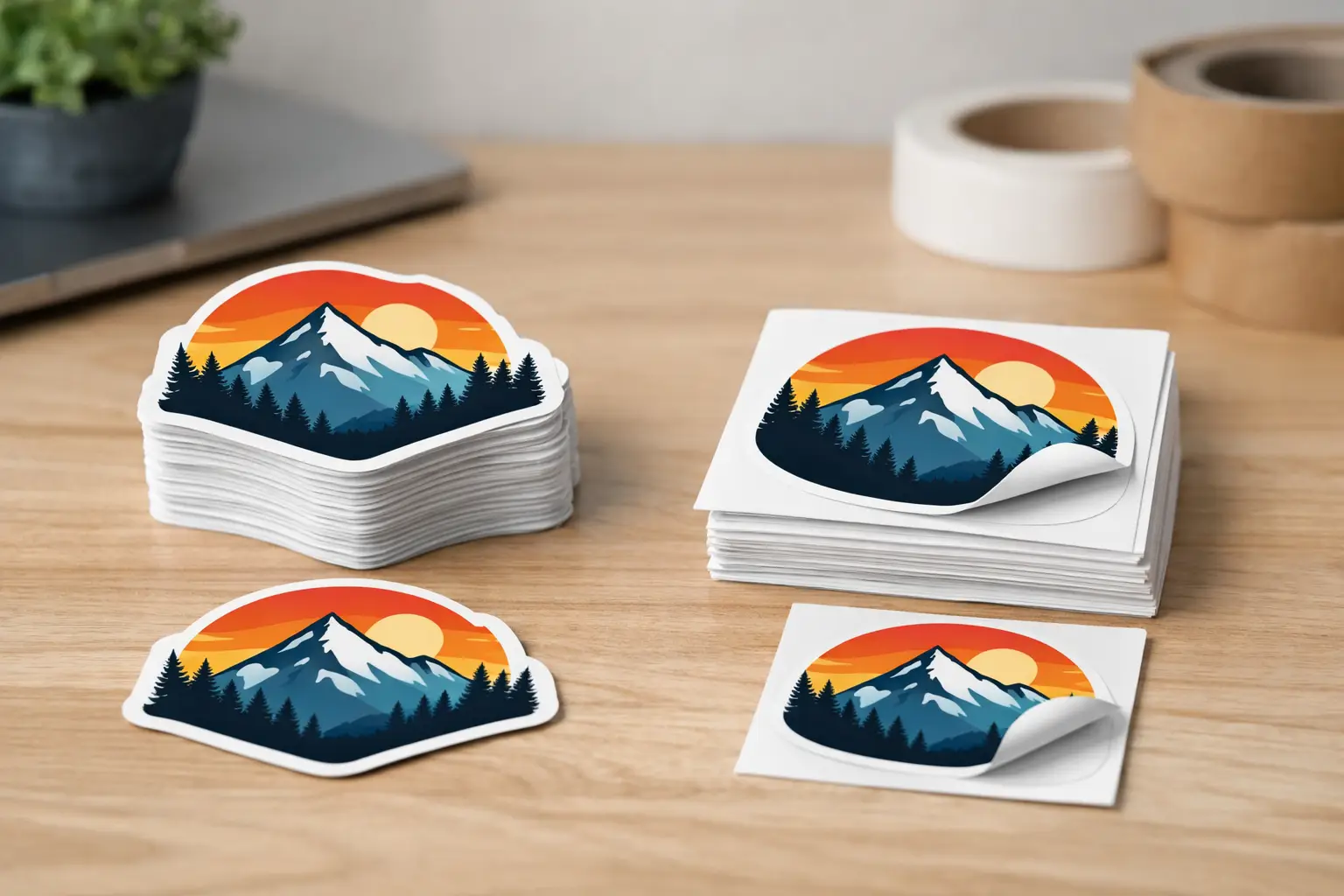
You have your artwork ready, the deadline is tight, and then the question lands: what is the difference between die cut and kiss cut stickers? Fair question. They can look similar on screen, but once they’re printed, handled and handed out, they do very different jobs.
If you’re ordering for a business, event, promo run or product launch, picking the right format matters more than most people expect. It affects how the sticker looks, how easy it is to peel, how it’s packaged, and how polished your brand feels in someone’s hand. So let’s cut through the confusion.
What is the difference between die cut and kiss cut stickers?
The short version is simple. Die cut stickers are cut all the way through the sticker material and backing paper to match the final shape. Kiss cut stickers are cut through the sticker layer only, while the backing paper stays whole and usually larger than the sticker itself.
That one production difference changes the whole experience. A die cut sticker feels clean, compact and ready to hand out. A kiss cut sticker gives you a border of backing around the design, which makes peeling easier and gives you more room for branding or handling.
Neither is automatically better. It depends on how you want the sticker to be used.
Die cut stickers explained
Die cut stickers are trimmed to the exact shape of your design. If your logo is a circle, script wordmark or custom outline, the final sticker follows that contour right to the edge. There’s no extra backing hanging around the outside.
This is the format people usually picture when they think of premium custom stickers. They look sharp, feel finished and photograph well. That makes them a favourite for brand merch, laptop stickers, hard hat decals, packaging inserts and event giveaways.
Because they’re cut to shape, die cut stickers have a strong standalone look. Hand someone a die cut sticker and it feels like a proper branded product, not just a label pulled off a roll. For businesses chasing impact, that matters.
When die cut stickers make the most sense
Die cut works best when appearance is the priority. If you want your artwork to feel crisp and custom, this is usually the winner. They’re also a strong choice when the sticker is being sold, included in merch packs or used as a promotional handout.
They suit bold logos, mascots, illustrations and simple shapes especially well. If your design has a distinctive outline, die cut lets that shape do the heavy lifting.
The trade-off is usability. Because there’s no larger backing edge, some small die cut stickers can be a bit fiddlier to peel, especially for people with short nails or when the sticker shape is intricate.
Kiss cut stickers explained
Kiss cut stickers keep the design cut to shape, but leave it sitting on a bigger backing sheet. That means the sticker itself can still be custom-shaped, while the outer backing stays square, rectangular or another easy-to-handle format.
The big benefit is convenience. That extra backing makes the sticker easier to peel, easier to stack and easier to package. If your order is going through lots of hands, being applied quickly, or needs a little more practical usability, kiss cut can be the smarter move.
They’re also handy when the design has fine edges or narrow points that might be awkward in a full die cut format. The larger backing gives the sticker more support before it’s applied.
When kiss cut stickers are the better option
Kiss cut stickers are a strong fit for retail packaging, product labels, instruction-based promo packs, event materials and any situation where easy application matters. They’re also popular for designs aimed at broad audiences, including kids, staff handouts and customer freebies.
If you want more room around the sticker for branding, a barcode, a QR code in print materials, or simple handling, kiss cut gives you that flexibility. It can feel slightly less minimal than die cut, but much more practical.
Die cut vs kiss cut stickers: the real-world difference
On paper, the difference sounds technical. In real life, it comes down to presentation versus convenience.
A die cut sticker is all about the finished look. It’s compact, eye-catching and feels premium the second someone picks it up. A kiss cut sticker is about ease. It protects the edges a bit better before use and makes peeling less of a hassle.
For some businesses, the answer is obvious. A café handing out logo stickers at the counter might lean die cut because they look slick and branded. A skincare brand adding application labels or promotional stickers into orders might prefer kiss cut because customers can peel them quickly without bending the corners.
That’s why this choice isn’t just about shape. It’s about what happens after the sticker arrives.
Which sticker format looks better?
If you want the blunt answer, die cut usually wins on looks.
It gives you a cleaner silhouette and a more custom feel. For brand visibility, merch appeal and that polished final presentation, die cut is hard to beat. It’s the format that often gets stuck on laptops, water bottles, toolboxes and car windows because it looks like a finished piece, not just a sticker waiting to be peeled.
That said, kiss cut doesn’t look cheap. Far from it. A well-made kiss cut sticker still looks sharp, especially if the backing is used well. It just has a more functional feel because of the extra border. For some use cases, that’s exactly what you want.
Which is easier to use?
Kiss cut, most of the time.
That extra backing edge gives people something to hold onto, which makes peeling simpler and reduces the chance of creasing the sticker before application. If your audience includes first-time buyers, busy staff, event volunteers or customers opening parcels in a rush, that small detail can make a big difference.
Die cut is still easy enough for most standard shapes, but once you go smaller or more detailed, peeling can become a bit more fiddly. Not a deal-breaker, just something worth knowing before you order a few hundred of them.
What is the difference between die cut and kiss cut stickers for businesses?
For business use, the right choice usually comes down to purpose.
If the sticker is part of your brand identity, die cut tends to be the stronger play. It feels intentional and premium, which helps when you’re using stickers as promotional gear, point-of-sale extras or branded packaging inserts.
If the sticker needs to be practical, kiss cut often has the edge. It’s easier for staff to handle, easier for customers to peel, and better suited to situations where speed and usability matter more than a super-trimmed finish.
Plenty of businesses use both. One for promo, one for packaging. One for giveaways, one for application. That’s not overkill. That’s just knowing the job each product does best.
Does sticker size and shape change the answer?
Absolutely.
Large, simple shapes work well as either die cut or kiss cut. But if your design is small, narrow, highly detailed or has tiny cut-outs, kiss cut can save a lot of frustration. The bigger backing supports the shape and makes the sticker easier to remove cleanly.
If your artwork is bold and uncomplicated, die cut can look unreal. If it’s more delicate, kiss cut may be the smarter production choice. Good print support should flag that early, especially if your file needs tweaking before it goes to press.
So which one should you order?
If you want the most polished, merch-style finish, go die cut. If you want easy peel, easy handling and a more practical format, go kiss cut.
That’s the cleanest answer, but there’s still some room for judgement. Ask yourself what matters most: how the sticker looks before it’s used, or how easy it is to use once it lands in someone’s hand?
For a lot of Australian businesses, the sweet spot is matching the format to the moment. Die cut for maximum brand impact. Kiss cut for convenience and smooth application. Both can look excellent when they’re printed properly, cut accurately and matched to the job.
If you’re still on the fence, don’t overcomplicate it. Start with how the sticker will be handed out, applied and seen. That usually tells you everything you need to know. And if you want a no-fuss answer from people who actually know stickers, Sticker Ninja can point you in the right direction fast.
Pick the format that makes life easier for your customer and makes your brand look sharp. That’s usually the right call.