
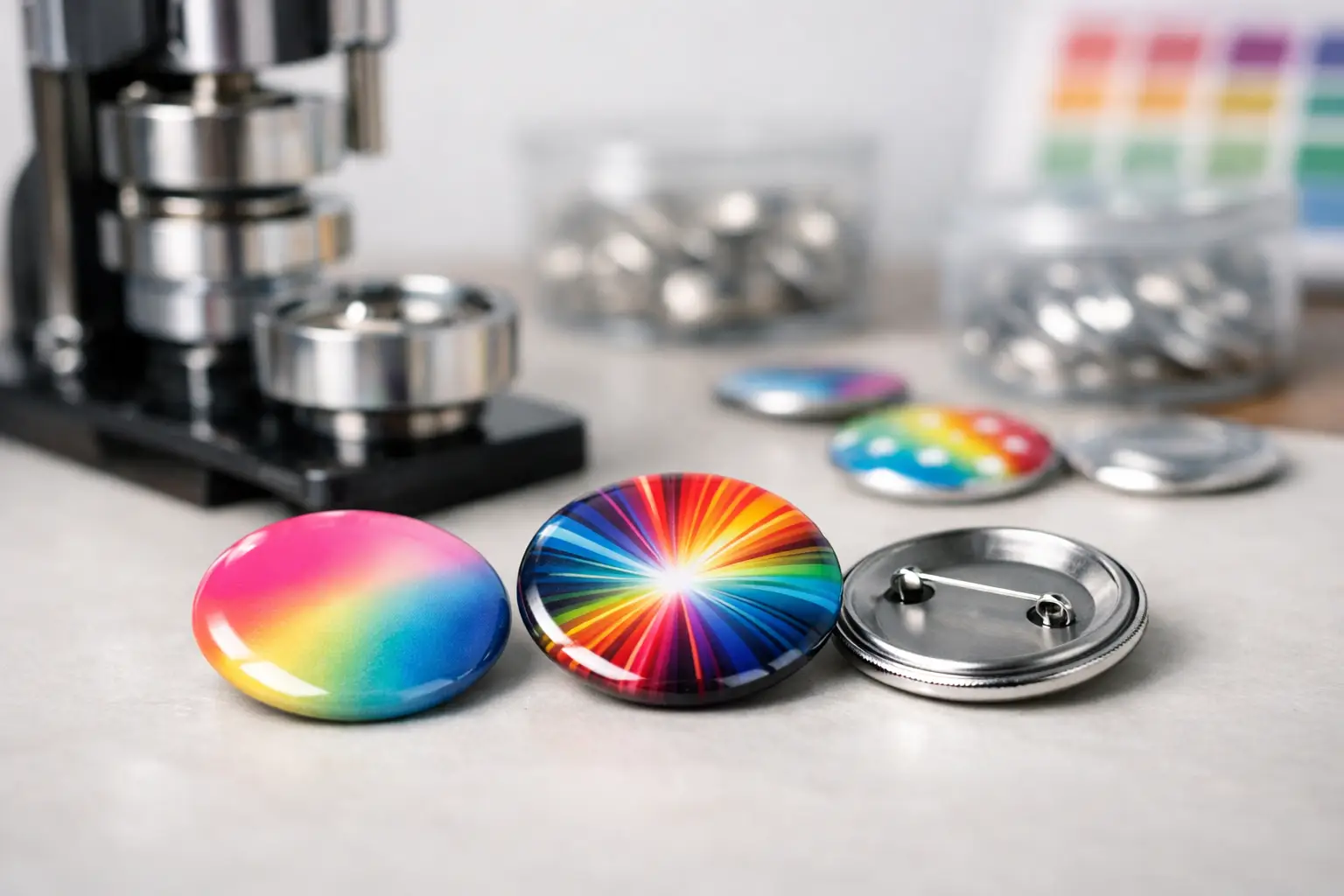
A badge only gets a second or two to do its job. On a staff shirt, at a market stall, on a conference lanyard or handed out at a fundraiser, it needs to read fast, look clean and feel worth keeping. That’s why button badge printing is less about squeezing artwork onto a circle and more about making smart choices before it goes anywhere near print.
If you’re ordering badges for a business, event or club, the good news is they’re simple, affordable and hard to beat for visibility. The catch is that small format print is unforgiving. Tiny text, weak contrast and crowded layouts get exposed straight away. Get it right, though, and button badges punch well above their weight.
Why button badge printing still works
Badges have stuck around for a reason. They’re cheap to hand out, easy to wear and they turn people into moving billboards without much effort. A sticker goes on a surface. A badge goes where people can actually see it – on uniforms, bags, jackets, hats and lanyards.
For businesses, that makes them useful for promotions, retail launches, staff identification and community events. For clubs, schools and charities, they’re great for fundraising, campaigns and team spirit. For personal events, they add a simple custom touch without blowing the budget.
They also hit a sweet spot between practical and fun. Flyers get binned. Some promo gear feels disposable. A well-designed badge has a better chance of being kept, especially if it looks sharp or says something worth wearing.
The best use cases for button badges
Not every print product suits every job, and badges are no different. They work best when visibility, low cost and easy distribution matter more than detail-heavy messaging.
If you’re running an event, badges are handy for crew, VIP guests, exhibitors or attendees. If you’re in retail or hospitality, they can work for staff names, limited campaigns or seasonal promotions. Real estate teams often use them for local events and community sponsorships where branded apparel alone feels a bit heavy. Bands, artists and creators love them because they’re affordable merch that people actually buy or grab on impulse.
There’s also a sentimental side to them. Memorial badges, birthday badges, hen’s nights, bucks parties and car club runs all suit this format. The print cost stays reasonable, even in smaller batches, so they’re accessible for one-off occasions as well as larger campaigns.
That said, if you need to explain a full offer, fit detailed instructions or show intricate imagery, a badge probably isn’t the hero product. In that case, it works better paired with flyers, stickers or signage rather than carrying the whole message on its own.
What makes button badge printing look good
Good badge design is ruthless. You do not have much space, and the round shape narrows your options even further. The best designs usually do one thing well. That might be a logo, a short slogan, a name, or a bold graphic. Trying to do all four at once is where things go sideways.
Start with hierarchy. What should someone notice first from a metre away? If it’s your logo, give it room. If it’s a name, make it large enough to read without squinting. If it’s a campaign line, keep it short and high contrast.
Colour choice matters more than people think. Bright colours can work brilliantly, but only if contrast is strong. Pale text on a light background might look stylish on a screen and muddy in print. Black on yellow, white on navy, red on white – simple combinations often perform better because they read quickly.
Typography is another common trap. Thin fonts and condensed type might suit a brand guide, but on a small badge they can become hard to read fast. A clean, heavier font usually wins. If your brand font is delicate, it may need a simplified treatment for badges.
And then there’s the edge. Because badges are pressed and assembled, artwork usually needs bleed and a safe area. That means important text and logos should stay clear of the outer rim. If you push elements too close to the edge, they can get trimmed awkwardly or warped around the curve.
Choosing the right size for button badge printing
Size changes everything. A small badge can look slick and subtle, but it limits your message. A larger badge is easier to read from a distance, though it can feel more promotional and less wearable depending on the audience.
Smaller sizes are ideal for simple logos, names or collectable sets. They suit giveaways, packaging extras and understated branding. Mid-sized badges are the all-rounders. They offer enough room for a clean design without feeling oversized on clothing or bags. Larger badges work best for events, campaigns and bold graphics where visibility matters most.
There’s no perfect size for every order. It depends on where the badge will be worn, how much information needs to fit, and whether the goal is branding, identification or merch. If your design only works when everything is shrunk down to the edge, it’s usually a sign you need a larger format or a simpler concept.
Artwork mistakes that cost you
Most badge print issues are not printing issues at all. They start in the artwork. Low-resolution files are a big one. If a logo has been pulled from a website or screenshot from social media, chances are it won’t print cleanly. Fuzzy edges and pixelated images stand out fast on a badge because the format is small and viewed up close.
Another issue is overcomplication. Designers and business owners alike sometimes try to include a logo, QR code, phone number, web address, social handle and tagline on one badge. That’s not efficient. It’s clutter. Pick the one message that matters most and let the badge do that job properly.
Poor alignment can also make a badge feel amateur. Because circles are visually tricky, artwork that is technically centred can still look off. It helps to check balance rather than relying only on guides. A badge should feel intentional, not like the design was dropped into a template and rushed out the door.
If you’re printing for an event with a hard deadline, proofing matters too. Fast turnaround is great, but only if the artwork is ready to go. Clean files, correct sizing and clear approval save everyone time and reduce the risk of last-minute fixes.
When to order badges instead of stickers
This comes up a lot, and fair enough. Both are affordable branded products, both are customisable, and both can support events, promotions and merch. The right choice depends on what you want people to do with them.
Choose badges when wearability matters. If the product needs to be seen on a person straight away, badges make sense. They’re ideal for staff, volunteers, attendees and merch tables. They create instant visibility and can help people identify roles or affiliations quickly.
Choose stickers when you want longer-term placement on laptops, packaging, windows, notebooks, hard hats or vehicles. Stickers are better for repeat impressions over time and they usually allow more freedom in shape and size.
Sometimes the best answer is both. A badge creates immediate presence at the event. A sticker goes home with people afterwards. That combination gives you short-term impact and longer-term brand exposure without overthinking it.
Speed, quality and support matter more than you think
Button badges are affordable, but cheap-looking badges still cost you. If the print is dull, the assembly feels flimsy or the artwork has been waved through without proper checking, the final product reflects on your brand.
That’s why local production and responsive support matter. When you’re ordering for a launch, trade show, school event or fundraiser, you do not want radio silence or vague lead times. You want clear communication, proofing that catches issues early, and print quality that holds up once the badges are in people’s hands.
This is where a specialist printer usually beats a generic one-stop shop. Better product knowledge means better advice on sizing, artwork setup and what will actually work in print. It also means fewer surprises when deadlines are tight. Sticker Ninja is built around that no-fuss approach – sharp print, fast turnaround and real support when you need it.
Getting better results from your next badge order
The strongest badge orders start with a simple brief. Know who the badge is for, where it will be worn and what one message needs to land. From there, keep the design bold, the text minimal and the file quality high.
If this is your first order, do not overcomplicate it. A clean logo badge, a readable name badge or a short punchy campaign message will nearly always outperform a crowded design trying to do too much. If this is a repeat order, look at what people actually wore, kept or commented on last time. The best feedback often comes from real-world use, not from staring at artwork on a screen.
A good badge feels easy. Easy to notice, easy to wear and easy to remember. That’s the standard worth aiming for, and it usually comes from keeping things sharper, simpler and more deliberate than you first think.
Leave a Reply
You must be logged in to post a comment.