
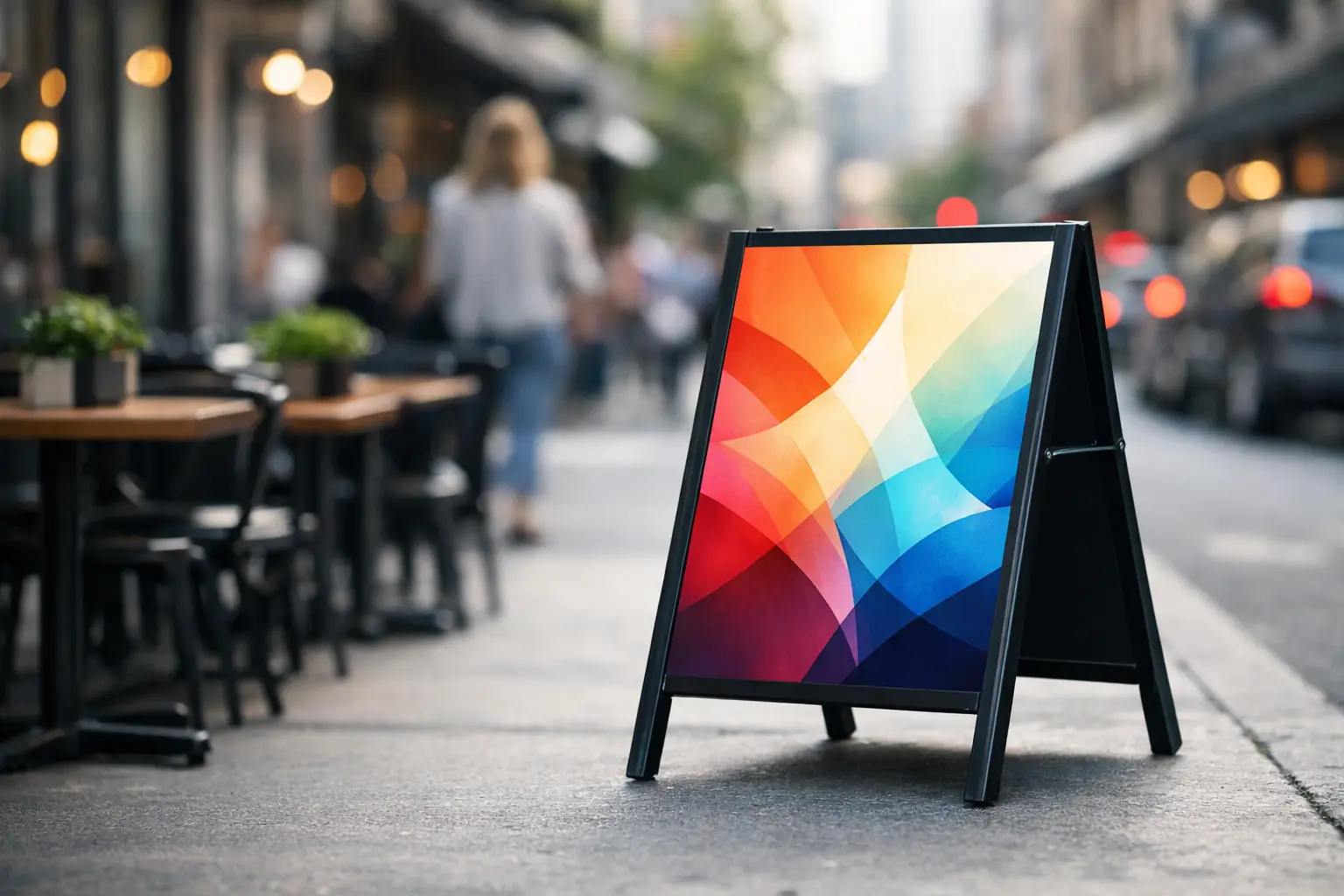
One bad footpath sign can make a good business look half-ready. Crooked layout, tiny text, washed-out colours, flimsy print – it all reads as an afterthought. That’s why a frame sign printing job deserves more attention than most people give it. If your sign is meant to stop passers-by, point people in the right direction, or pull in walk-in traffic, it needs to do its job fast.
For plenty of Australian businesses, A-frame signs are one of the hardest-working bits of promo gear they own. Cafes use them to move breakfast specials. Real estate teams use them for opens. Retail shops use them to push sales. Event organisers use them to direct crowds without overcomplicating things. They’re simple, but they’re not throwaway. Get the print right and an A-frame can keep earning its spot on the footpath day after day.
Why a frame sign printing still works
There’s a reason these signs haven’t disappeared. They’re practical, visible, and easy to move. You don’t need wall space, a complicated install, or a big budget to make them useful. You just put them where people are already walking and give them a message worth noticing.
The real strength of A-frame signage is timing. People see it at decision-making distance. That matters when someone is choosing between one cafe and the next, trying to find an event entry, or spotting a weekend special on the way past. A billboard builds awareness. An A-frame often gets the actual action.
That said, not every sign earns attention. If the print lacks contrast, the layout is cluttered, or the message asks people to do too much reading, the opportunity is gone in a second. Good A-frame sign printing is less about cramming in information and more about making one clear point at a glance.
What makes a good A-frame sign print
A good sign starts with readability. People usually see these signs while walking, driving slowly, or scanning quickly. That means the best designs are bold, clean, and direct. Your business name can be on it, sure, but the message needs to lead. Think coffee and toast from 6am, open home today, 20% off inside, or entry around the corner. Short wins.
Contrast does a lot of heavy lifting. Dark text on a light background, or the reverse, gives you a better shot at getting noticed. Pale colours can look great on screen but disappear outdoors, especially in bright Australian light. Fine script fonts might suit a brand deck, but they often fail on a footpath sign. If somebody has to slow down to decode the message, the sign is already underperforming.
Print quality matters too. Crisp edges, solid colour, and sharp image reproduction make the whole business look more professional. Cheap-looking print doesn’t just hurt the sign. It reflects on your brand. That’s especially important for real estate, trades, retail and events, where first impressions can shape trust before a conversation even starts.
Choosing the right material for a frame sign printing job
Material choice depends on where and how the sign will be used. If it’s indoors at an expo or shopping centre activation, you may not need the same toughness required for a busy suburban footpath. If it’s going outside every day, durability becomes a much bigger deal.
Corflute is a common option because it’s lightweight and cost-effective. It works well for short-term promotions, event directional signage, and campaigns that change regularly. It’s easy to handle and replace, which makes it a smart call when speed and budget matter most.
ACM, or aluminium composite material, is the tougher option for businesses wanting a more durable insert. It’s stronger, more rigid, and better suited to longer-term use. If your sign is living outdoors most days, or you want something that holds its shape and presentation over time, ACM usually gives better value despite the higher upfront cost.
This is where trade-offs matter. If you’re changing messages every week, a cheaper replaceable panel can make more sense than a premium permanent one. If your branding needs to stay consistent and polished for months, spending more on a sturdier print is often the better move.
Design mistakes that kill results
The biggest mistake is saying too much. An A-frame is not a brochure. It’s not a website homepage either. It gets a second or two of attention, if that. Trying to list your services, opening hours, social handles, slogan and phone number all at once usually turns the whole thing into visual noise.
Another common issue is poor hierarchy. If everything is bold, nothing stands out. The main message should be obvious first, with any supporting detail clearly secondary. People should know what the sign is about before they’re close enough to read the fine print.
Photos can help, but only if they’re high quality and relevant. A great food image can work for a cafe. A property photo can work for a real estate sign. But muddy images, low-resolution graphics, or stock art that looks generic can drag the whole sign down. Clean typography often beats a busy visual every time.
And then there’s sizing. Tiny text is probably the most common own goal in A-frame design. If your sign will be read from a few metres away, design for that. Bigger text, stronger spacing, and less clutter almost always perform better.
Who should invest in better A-frame printing?
If your business depends on local visibility, this is one of the easiest upgrades you can make. Cafes, bakeries, salons, florists and retail stores get obvious value because they rely on walk-by traffic. But A-frames also punch above their weight for service businesses, markets, schools, clubs and temporary events.
Real estate is a strong example. Directional A-frames for open homes need to be clear, consistent and easy to spot. A faded or flimsy sign can make a polished agency look sloppy. The same goes for tradies at expos, community groups running weekend events, or brands setting up pop-ups. If people need help finding you, or one more reason to walk in, the sign has a job to do.
For businesses already investing in flyers, stickers, posters or other promo print, A-frames fit neatly into the mix. They do a different job. Stickers travel, labels sell, flyers inform, and A-frames catch people in the moment.
How to get the best result from your printer
Start with a clear use case. Is the sign for daily outdoor use, a short campaign, an event weekend, or a rotating set of promotions? That shapes the best material, print method and artwork setup. If you’re not sure, say that upfront. A good print partner should help you narrow it down without making it feel like homework.
Artwork quality matters more than many customers expect. If your logo is pulled from a social media profile pic or an old screenshot, the print will show every weakness. Vector files are ideal for logos and text-heavy designs because they stay sharp at size. High-resolution artwork gives you a much better chance of a clean result.
Proofing is worth taking seriously. This is the stage to catch spelling errors, spacing issues, low-contrast colours, or messages that feel too busy once laid out at full size. A fast turnaround is great, but not if it means racing past obvious fixes.
It also helps to think beyond the first order. If you’ll need matching signs later, or seasonal panel swaps, consistency matters. Working with a responsive local printer can make repeat jobs much easier, especially when deadlines are tight and you don’t want to explain your brand from scratch every time.
A frame sign printing for brands that want less fuss
The best A-frame signs don’t try too hard. They look sharp, say one thing clearly, and hold up in the real world. That’s the sweet spot. For most businesses, the goal isn’t to create a design award entry. It’s to get seen, look credible, and make the next action obvious.
That’s why a frame sign printing should be approached like a working business asset, not a last-minute extra. If it sits outside your shop, directs customers to your event, or carries your brand into the street, it deserves decent materials, clear design and print that won’t let you down. Sticker Ninja gets that. Fast, sharp, no mucking around.
If your sign needs to earn attention in a hurry, keep it simple, make it readable, and print it like your brand means business.
Leave a Reply
You must be logged in to post a comment.