
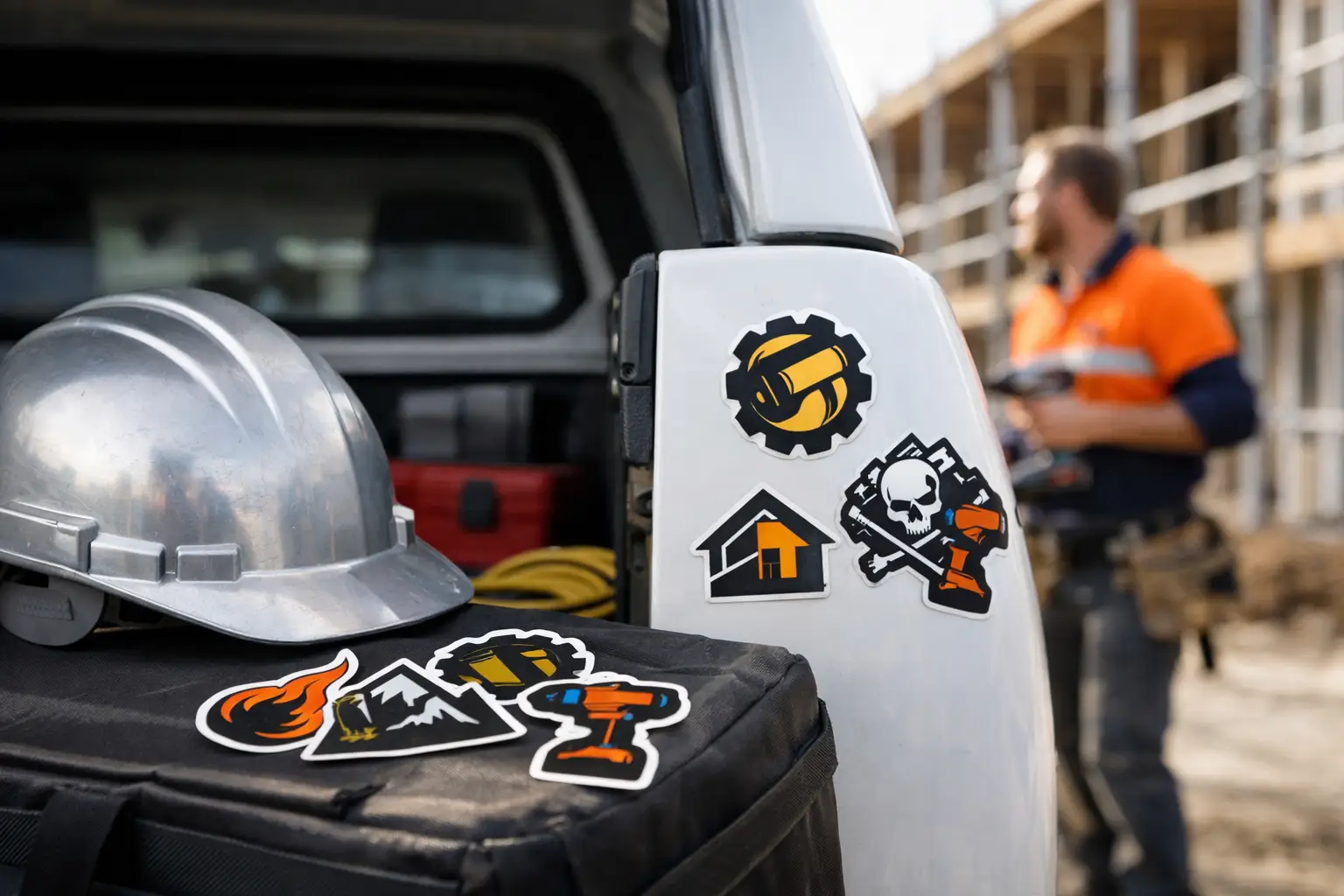
A clean ute with no branding is a missed chance. So is a toolbox, hard hat, site box or stack of invoices that could be carrying your business name. Custom stickers for tradies are one of the simplest ways to get your brand in front of locals without paying for the same eyeballs again and again.
That matters when you’re quoting one day, on the tools the next, and trying to stay top of mind in a crowded market. A good sticker does not need to be flashy. It needs to be clear, tough, and placed where people actually see it.
Why custom stickers for tradies work so well
Tradies do not need more marketing theory. You need gear that works hard, looks sharp and survives real use. That is exactly why stickers make sense.
You already move around suburbs, job sites and supplier yards all week. Your vehicle, equipment and packaging are doing the rounds anyway, so branding them is low-effort exposure. One well-made sticker on the back window of a ute or the side of a tool case can rack up views every day without adding another task to your list.
There is also a trust factor. People are more likely to remember a business that looks established. A visible logo, business name and mobile number can make a sole trader look more buttoned-up and easier to contact. For sparkies, plumbers, chippies, landscapers, tilers, painters and concreters, that professional edge counts.
The best part is cost. Compared with larger signage or ongoing ad spend, stickers are a pretty lean move. You can order exactly what you need, use them across different surfaces, and top up when the stack runs low.
Where tradies actually use branded stickers
This is where custom stickers pull their weight. They are not just for slapping on a bumper and calling it a day.
Vehicles are the obvious starting point. Utes, vans and trailers are mobile billboards, especially if you work locally. A clear die cut sticker with your logo and number can do plenty if it is sized properly and applied neatly. For some businesses, a more subtle sticker on windows or tool canopies makes sense. Others want bigger branding that is readable from a few car lengths back.
Tools and equipment are another smart spot. Stickering toolboxes, cases, ladders, storage tubs and site gear helps with both branding and identification. On a busy site, having your name on your gear is practical. It can also reduce mix-ups when everyone owns the same brand tools.
Tradies also use stickers on product packaging, sample folders, service reminders and handout material. If you leave behind a care guide, quote folder or thank-you pack, a branded sticker can finish it off properly. It is a small touch, but customers notice when things look consistent.
Then there are site signs and temporary uses. If you need short-run branding for projects, events or local promos, stickers can be quicker and more flexible than overcomplicating the job.
Picking the right sticker type for the job
Not all stickers are built for the same conditions, and this is where people either get it right or waste money.
Die cut stickers for bold branding
Die cut stickers are a strong choice if you want your logo shape to stand out without a chunky background. They look clean, modern and professional, especially on vehicle windows, tool cases and laptops used for quoting or admin. If your branding has a strong logo mark, this format usually looks the part.
Clear stickers for a cleaner finish
Clear stickers suit glass, smooth plastic and surfaces where you want the design to feel less heavy. They can look premium on windows and some equipment, but they need solid artwork choices. Pale text or weak contrast can disappear fast, especially outdoors. If readability matters from a distance, clear is not always the best play.
Bumper stickers and larger formats
For trailers, utes and bigger equipment, bumper-style stickers or larger decals can give you better visibility. If people cannot read your business name while waiting at lights, the sticker is too small. Bigger is not always better, but unreadable is useless.
Sticker sheets for everyday use
If you use branded labels across paperwork, packaging or leave-behind materials, sticker sheets make life easy. They are practical, tidy and quick to apply when you are flat out.
What makes a tradie sticker worth paying for
A cheap sticker that curls, fades or peels after a few weeks is not cheap. It is just annoying.
Tradies need stickers that can handle sun, dust, moisture and regular handling. Australian conditions are hard on print, especially on vehicles parked outdoors and equipment dragged from site to site. Material quality matters. Print quality matters. Adhesive matters.
You also want colours that stay punchy and text that stays legible. Fine details might look good on a screen, but they do not always survive real-world use. That is why artwork proofing matters more than people think. A proper proof can catch sizing issues, spacing problems and text that will be impossible to read once printed.
Fast turnaround matters too. A lot of tradies order print when they are already under the pump – new business launch, new vehicle, event coming up, team expansion, or a last-minute rebrand. Waiting around for vague updates is a pain. Clear communication and local production make a real difference when the clock is ticking.
Design tips that actually help tradies get noticed
A good sticker is not about cramming in everything. It is about making the right details easy to spot in a few seconds.
Start with your business name or logo. Then add one clear contact point, usually a mobile number or website, depending on how customers typically reach you. If you try to include every service, social handle and slogan, the design gets messy fast.
Keep contrast high. Dark text on a light background, or the reverse, usually works best. Script fonts and tiny type might look fancy on a mock-up, but on a dusty rear window from ten metres away, they fall apart.
Think about where the sticker will go before finalising the artwork. A design for a rear window is not the same as one for a narrow toolbox or hard hat. Shape, size and viewing distance all change what works.
If you run multiple services, it can make sense to keep the main branding consistent and create slight variations for different uses. A bigger logo sticker for the ute, smaller labels for tools, and tidy branded stickers for paperwork can all work together without looking repetitive.
The trade-off between subtle and loud
There is no single right style for every tradie business.
Some brands suit a clean, minimal look. If your work is high-end residential, architectural or design-focused, a sharp logo sticker with restrained colours can feel more premium. On the flip side, if your business wins work through local visibility and repeat suburb exposure, louder branding with stronger contrast and bigger text can do more heavy lifting.
It depends on your market, your brand and where the sticker will be seen. The trick is not choosing what looks best on your screen. It is choosing what works on the road, on site and in the hands of customers.
Why fast, local support matters more than people admit
Ordering print should not feel like guesswork. When artwork needs tweaking or you are unsure which format suits your job, responsive support saves time and avoids rubbish outcomes.
That is especially true for tradies ordering between jobs or after hours. You do not want to chase a generic print company that treats stickers like an afterthought. You want specialists who know the product, proof the artwork properly and get the order moving.
That is where a sticker-first business has the edge. Sticker Ninja, for example, is built around high-quality Australian-made sticker printing with quick turnaround and proper customer support. For tradies who need sharp results without the muck-around, that kind of setup makes ordering a lot easier.
Custom stickers for tradies are small, but they punch above their weight
A sticker will not replace good service, solid workmanship or word of mouth. But it can make your business more visible, more memorable and more professional in the places that count.
For tradies, that usually means the difference between being just another vehicle on the road and being the one a customer remembers when they need the job done. If your gear is already out there doing the rounds, it may as well be working for your brand too.