
Uncategorized
Holographic Stickers Review: Worth It?
05
Jun
Jun
Some stickers look good on screen, then show up flat, dull, or a bit cheap in real life. Holographic ones are the opposite. A proper holographic stickers review matters because this finish can either make your design look next-level or fight with it completely, depending on the artwork, the use case, and how much visual noise you actually want.
If you are ordering for a brand launch, event merch, product packaging, car club run, or promo giveaway, the appeal is obvious. Holographic stickers grab attention fast. They shift in the light, create movement without animation, and make even a simple logo feel more premium. But they are not a magic fix for weak artwork. Like any specialty finish, they work best when the design and the material are doing the same job.
Holographic stickers review: what stands out first
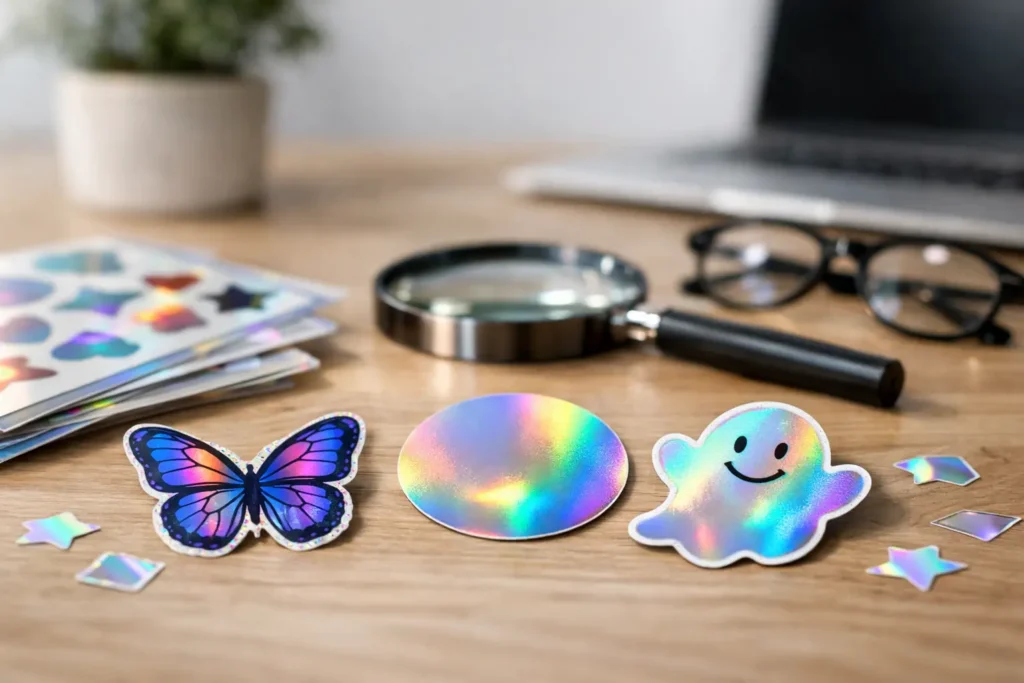
The first thing people notice is the shine. Not a subtle satin shimmer. Proper holographic stock throws light around and changes as you move it. On a laptop, water bottle, packaging sleeve or shop counter handout, that means your sticker gets seen before someone reads it.
That is the upside, and it is a big one for brands that need cut-through. If you are competing for attention at markets, expos, festivals or retail counters, holographic stickers can do a lot of heavy lifting. They feel special straight away, which is why they are popular with artists, beverage brands, beauty businesses, clubs and event organisers.
The trade-off is that this finish is loud. If your branding relies on muted tones, tiny details or a very controlled premium look, holographic may be too much. Sometimes a clean matte or gloss sticker is the stronger choice because it keeps the message sharper and more predictable.
Print quality on holographic stock
This is where a lot of people get caught. Holographic material does not behave exactly like standard white vinyl. Because the surface is reflective, colours can appear different depending on the artwork and the way light hits the sticker.
Bold shapes, strong contrast, thicker linework and simple logos usually look brilliant. Black text, dark outlines and high-contrast graphics tend to hold up well. Designs with lots of tiny fine print or very soft pastel colour blends can be harder to read or lose some punch against the shifting background.
White ink treatment makes a huge difference too. If parts of the design are backed with white, those areas stay more solid and true to colour. If they are left unbacked, the holographic effect comes through strongly. That can look unreal when used on purpose. It can also make artwork feel messy if it was not planned properly.
So if you want the blunt version of this holographic stickers review, here it is: the material is excellent, but your artwork needs to suit it. Good design gets amplified. Average design gets exposed.
Best-performing artwork styles
Logos with strong outlines, mascot graphics, streetwear branding, limited edition product labels and bold event artwork tend to perform really well. Holographic stock also suits designs that intentionally play with transparency and negative space, because the shifting finish becomes part of the design rather than just sitting underneath it.
Photo-heavy artwork or highly detailed illustrations can still work, but they need more care. If every part of the design is busy, the holographic effect can push it over the edge.
Durability in the real world
Looks are one thing. Performance is the bit that matters once the sticker leaves the backing sheet.
A good holographic vinyl sticker should hold up well on everyday surfaces like drink bottles, laptops, packaging, notebooks, toolboxes and display materials. For business use, that means they are not just for showbags and one-day promos. They can absolutely work as a proper branded asset.
Outdoors, it depends on the stock, adhesive, laminate and exposure. If the sticker is going on a car window, a ute, equipment case, sandwich board or outdoor packaging, durability matters more than sparkle. You want material that resists fading, peeling and general wear, especially in Australian sun. Cheap holographic stickers can look fantastic on day one and cooked a few weeks later.
That is why production quality matters as much as the finish itself. You are not just buying a shiny surface. You are buying print clarity, adhesive performance, cut accuracy and a material that can handle where it is going.
Indoor versus outdoor use
For indoor branding, giveaways and event handouts, holographic stickers are a strong play. They create a premium feel without needing expensive extras.
For outdoor use, they can still be a great option, but you need to order with the application in mind. A sticker on a product box has different demands to one on a trailer, shopfront or hard hat. If the use is rough, always choose durability first and effect second.
Where holographic stickers work best
This is not an every-business, every-order product. But when it fits, it really fits.
Retail packaging is one of the best uses. A small holographic seal or branded die cut sticker can make packaging feel more expensive without blowing the budget. Event merch is another obvious winner. If you want people to actually keep the sticker instead of binning it with the rest of the handouts, holographic gives it a better chance.
They are also popular with car groups, music events, gaming brands, beauty labels, creators and clubs because the finish has personality. It feels collectible. That matters when the sticker itself is part of the product experience.
On the other hand, if you need compliance labels, instructions, property management use, or anything text-heavy and purely functional, holographic is usually the wrong tool. It is built to catch the eye, not disappear into the background.
Value for money
Holographic stickers generally cost more than standard vinyl, and fair enough. You are paying for a specialty stock that adds a visible effect before anyone even touches it.
The real question is whether the extra spend gives you a return. For many brands, yes. If a holographic sticker helps your packaging stand out, gets customers posting it, improves perceived value, or makes your giveaway more memorable, the maths can stack up quickly.
If you are ordering the cheapest possible promo sticker just to get your name out there, standard options may be smarter. Not every campaign needs the premium finish. But if the sticker is meant to represent your brand, support a launch, or carry a limited edition feel, holographic can punch above its price.
Holographic stickers review: who should buy them?
If your goal is attention, personality and a more premium look, holographic stickers are absolutely worth considering. They suit businesses and organisers who want visual impact fast and are willing to tailor their artwork to the material.
They are especially good for:
- branded packaging
- artist and creator merch
- event giveaways
- product launches
- clubs, communities and collectable sticker runs
They are less ideal if your design depends on small text, strict colour matching, or a restrained corporate style. That does not make them bad. It just means they are a specialist product, not an all-rounder.
The final verdict
A solid holographic stickers review comes down to one simple truth: the finish is impressive, but it works best when used on purpose. If you want a sticker that shouts for attention, feels premium in hand, and gives people a reason to keep it, holographic is a very strong option. If you need quiet, precise, text-first communication, skip the sparkle.
For Australian businesses, event organisers and creatives, the smart move is not asking whether holographic stickers are good. They are. The better question is whether they match the job. Get that right, and they do more than look cool. They make your brand harder to ignore.
If you are torn between standard vinyl and holographic, trust the use case, not just the sample photo. The best sticker is the one that still makes sense once it is out in the wild, stuck on, and doing its job.