
Uncategorized
How to Choose Sticker Materials That Last
23
Jul
Jul
A sticker that peels off a tradie’s ute after one hot summer, smudges on a takeaway cup, or disappears against a shop window is not doing its job. Knowing how to choose sticker materials means starting with where the sticker will live, what it needs to stick to, and how hard that surface will be treated.
The design matters, of course. But the material is what decides whether your brand looks sharp for a day, a month or years. Get the base right and your stickers will work harder – on products, packaging, vehicles, event gear and everything in between.
Start with the sticker’s real-world job
Before picking a finish because it looks good on screen, think about the sticker’s working conditions. Is it going indoors on dry packaging? Outdoors on a trailer? Around moisture, oils, sunscreen, fridge condensation or constant handling? Those details narrow the material choice quickly.
For short-term indoor promotions, paper labels can be a cost-effective option with a classic printed feel. They suit retail packaging, jars, boxes, envelopes and event handouts that will stay dry. Paper is not the pick for water bottles, bathrooms, eskies or anything likely to get wet. Once moisture gets involved, vinyl is usually the smarter call.
Vinyl stickers are the go-to for durability. They handle the knocks, weather and daily handling that come with business use, outdoor promotions and personal gear. For most customers who need a sticker to keep looking good beyond the first week, vinyl provides the best all-round starting point.
How to choose sticker materials by surface
A great sticker material can still fail if it is matched to the wrong surface. Smooth, clean surfaces are easy. Textured, curved, oily or flexible ones need more thought.
Smooth packaging, boxes and product labels
For cartons, mailers, boxes, glass jars and smooth product packaging, you have the widest choice. Paper can work well for dry, short-life packaging, especially where a natural or matte look suits the brand. Vinyl is better when products are refrigerated, handled frequently, exposed to moisture, or likely to sit in a bathroom, kitchen or worksite.
A glossy finish makes colours pop and can give food, beauty and retail labels a polished shelf presence. Matte has a more understated feel and is easier to read under bright lights because it creates less glare. Neither is automatically better. It comes down to your brand and where the product is seen.
Cars, utes, trailers and outdoor equipment
Vehicle stickers need to handle UV exposure, rain, road grime and regular washing. This is vinyl territory. A durable vinyl with a protective laminate is made for the job, helping shield the print from fading, scratching and moisture.
Bumper stickers are built with outdoor use in mind, but placement still matters. Apply them to a clean, dry, smooth area of painted metal, glass or hard plastic. Avoid heavily textured bumpers, damaged paint and areas that flex constantly. Even premium adhesive has limits when the surface is uneven or contaminated.
Windows and glass
Clear stickers are a strong choice when you want your design to appear printed directly on glass. They work brilliantly for shopfronts, cafe doors, office windows and vehicle glass, particularly when the design includes white ink behind key elements for contrast.
The trade-off is visibility. Clear material looks slick, but pale artwork can vanish on a busy or bright background. If your logo uses fine white text or soft colours, make sure the design is built for the surface behind it. A standard white vinyl sticker may deliver more impact.
Bottles, tubs and anything that gets wet
For drink bottles, cosmetic tubs, candle jars, food containers and cleaning products, choose a water-resistant vinyl material. Add laminate if the sticker will face regular water, rubbing or refrigeration. Gloss laminate suits bold product branding, while matte laminate gives a premium, lower-shine finish without sacrificing practical protection.
Also consider the container itself. A smooth rigid bottle is straightforward. Soft squeeze bottles, heavily curved jars and textured plastic are more demanding. Keep important text away from sharp curves and test the application if the label needs to wrap around a difficult shape.
Pick a finish that supports the design
Material is not only about survival. It changes how your artwork is seen and felt. The finish should support the message rather than compete with it.
Glossy stickers are bright, smooth and punchy. They are a natural fit for colourful logos, illustrated designs, promotional giveaways and packaging that needs to stand out fast. They also wipe clean easily, which is handy for hospitality and product labels.
Matte stickers look more refined and reduce reflections. They suit minimalist branding, premium products, photography-led designs and stickers that need to be read outdoors. A matte finish can make dark tones and subtle artwork feel more considered, though it will not have the same high-shine pop as gloss.
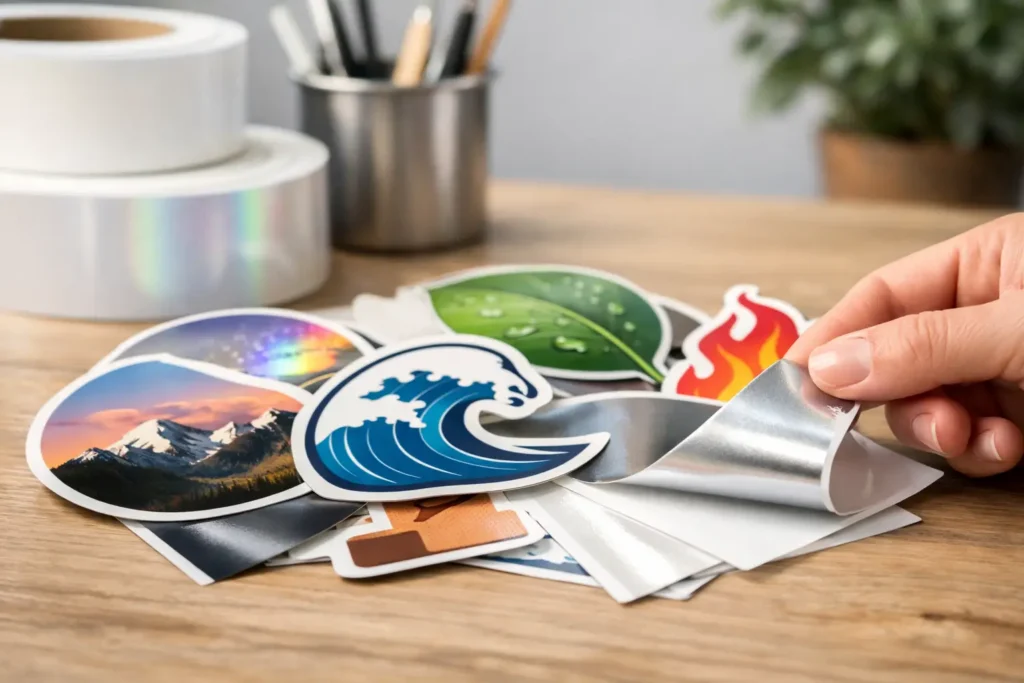
Holographic stickers bring movement and attention. They are ideal for creative brands, merch, clubs, limited-edition packaging and event giveaways where the sticker itself needs to feel special. The catch is that holographic material can compete with small text and fine details. Keep the artwork bold, use strong contrast, and let the material do some of the talking.
Adhesive matters more than most people think
Most sticker problems are adhesive problems disguised as material problems. A label may look perfect when applied, then lift at the corners because the surface was dusty, cold, oily or difficult to bond with.
Permanent adhesive is the standard choice for branding, packaging and long-term use. It is designed to stay put, making it a solid option for products, equipment, mailers and promotional stickers. Apply it carefully because removal may leave residue or damage delicate surfaces.
Removable options suit temporary promotions, event signage, short campaigns and applications where you do not want a permanent commitment. If easy removal is essential, say so before ordering. Do not assume every sticker can come off cleanly after months in the sun.
Whatever you choose, prep the surface. Wipe away dust, grease and moisture, then apply the sticker at room temperature where possible. Press from the centre outward to reduce air bubbles. It is a small step that makes a big difference to adhesion.
Choose the right format, not just the right material
The material and shape work together. A die cut sticker follows the exact outline of your design, making it a strong option for logos, mascots, product silhouettes and bold brand marks. It feels custom because it is.
Kiss cut stickers keep the sticker on a larger backing sheet. They are easier to peel, especially for detailed shapes, and work well for handouts, retail displays and branded freebies. Sticker sheets are ideal when you have multiple designs, small icons or a campaign with several messages.
For labels on products, a simple circle, rectangle or custom shape can all work. The key is practical placement. Tiny text around a tight circle may look great in a mock-up but become hard to read in real life. Give your design enough breathing room and choose a size people can actually notice.
Do not design for a white screen
Your artwork should be built for the material, finish and application surface. That means checking contrast, line thickness and text size before production.
Dark artwork on clear vinyl needs a plan for whatever sits behind it. Fine lines may not hold the same impact on textured materials. Small type can become unreadable on holographic finishes. And a black logo can look different when printed in gloss versus matte.
If the sticker carries practical information – a phone number, QR code, ingredients, safety note or event date – readability comes first. Test QR codes at their final printed size, use high contrast, and avoid placing essential details too close to the edge. A sharp-looking sticker is great. A sharp-looking sticker that gets results is better.
Match your budget to the job
There is no prize for using the toughest outdoor material on a one-night indoor event, just as there is no saving in choosing a cheap paper label for a bottle that will live in an ice bucket. Spend where the conditions demand it.
For a large run of simple packaging labels, a practical material and straightforward shape may give you the best value. For branded hard hats, cars, outdoor equipment or retail products, durability is part of the investment. Replacing failed stickers costs more than choosing properly the first time.
If you are unsure, describe the surface, environment and intended lifespan when requesting your order. Sticker Ninja can help take the guesswork out of the material and finish, especially when your stickers need to perform under pressure.
The best choice is rarely the flashiest option on a product page. It is the one that still looks like your brand after the rain, the fridge, the commute and a hundred pairs of hands have had a go at it.