
Uncategorized
What Stickers Suit Outdoor Branding Best?
01
Jul
Jul
A faded sticker on a shop window does your brand no favours. Neither does one that peels off a ute door after the first hot week, curls at the edges on a sandwich board, or turns cloudy in the rain. If you’re wondering what stickers suit outdoor branding, the short answer is simple – not all stickers are built for Australian conditions, and the right choice depends on where they’re going, how long they need to last, and how hard the weather is going to hit them.
What stickers suit outdoor branding in Australia?
Outdoor branding has a tougher job than indoor promo. Sun, heat, wind, moisture, dust and constant handling all put pressure on the material, the print and the adhesive. A sticker that looks great on a laptop can completely fall apart on a vehicle, an A-frame sign or a street-facing window.
For most outdoor use, vinyl is the safe bet. It’s durable, flexible and much better suited to changing temperatures than cheaper paper-based options. If you want clean branding on vehicles, outdoor equipment, windows or signs, vinyl gives you the best shot at colour hold, edge stability and proper adhesion over time.
That said, there isn’t one perfect sticker for every outdoor job. A bumper sticker has different demands to a clear window decal. A real estate sticker on a corflute sign has different needs again. Getting it right means matching the sticker type to the surface and the environment, not just picking whatever looks cheapest at checkout.
Start with the surface, not the artwork
Most people start by thinking about shape, logo placement and finish. Fair enough. But outdoor performance usually comes down to the surface first.
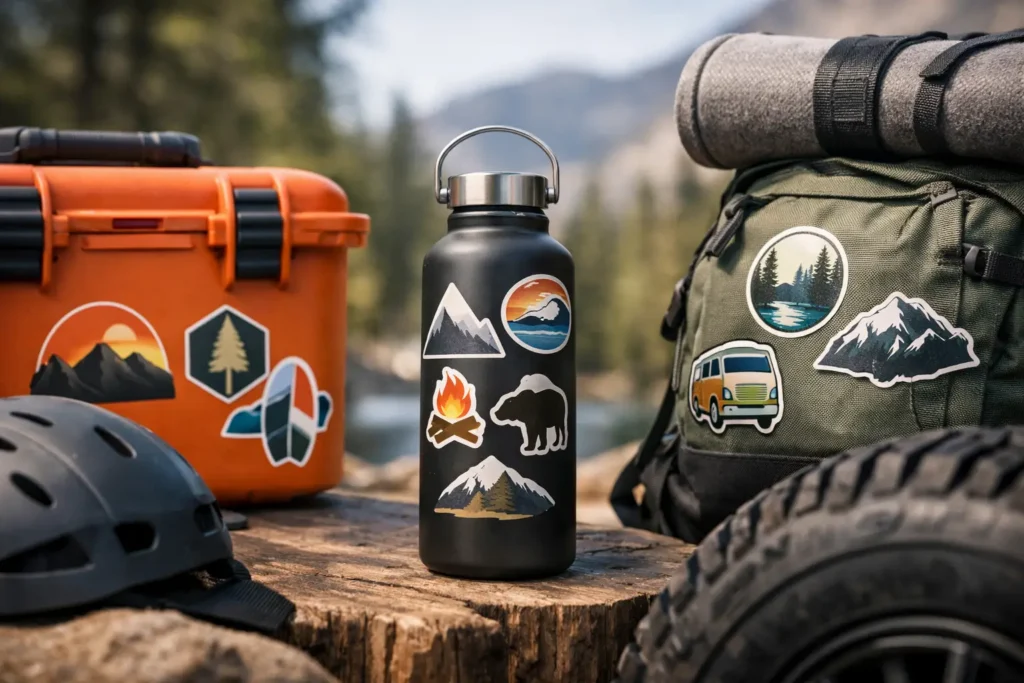
If the sticker is going on a vehicle, trailer, van or ute, you need a material that can handle movement, weather and regular washing. Vinyl works well here because it has flexibility and strong adhesion. Die cut vinyl stickers are a popular option when you want branding to look sharp without a background shape boxing it in.
If the sticker is going on glass, clear stickers can be a smart choice. They give you a cleaner look and work well on shopfronts, salon windows, office doors and event spaces. The catch is visibility. A clear sticker can look premium, but only if the artwork has enough contrast to stand out against whatever is behind the glass.
For temporary outdoor campaigns, such as event signage or short-term promotions, you might not need the longest lifespan. In that case, a simpler vinyl option can still do the job well without overcommitting on specs you don’t need. If the branding needs to stay put for months in full sun, though, durability matters a lot more.
Vinyl is usually the winner – but not always for the same reason
When customers ask what stickers suit outdoor branding best, vinyl is usually the first answer because it covers the widest range of uses. It sticks well, prints sharply, and holds up better than lower-cost alternatives in outdoor conditions.
But even within vinyl, the best fit depends on the application. A bumper sticker needs strong hold and good weather resistance. A window sticker might need a smoother finish and better visual clarity. A sticker for hard hats, toolboxes or outdoor machinery may need to cope with scuffs as much as rain.
This is where a lot of bad sticker decisions happen. People hear “outdoor vinyl” and assume every vinyl sticker performs the same way. Not true. Thickness, laminate, adhesive type and finish all affect how a sticker behaves once it leaves the backing sheet.
Gloss can make colours pop and give branding extra punch, which is great for promotional use. Matte can reduce glare, which matters more on windows, signs or any surface viewed in bright sunlight. Neither is universally better. It depends on whether you want maximum visual impact or easier readability in harsh light.
The real question is how long it needs to last
Outdoor branding can be short-term, medium-term or set-and-forget. That timeframe changes the right sticker choice straight away.
If you’re branding an event, festival, market stall or temporary activation, you may only need the sticker to last a few days or weeks. In that case, you can focus more on visual impact and less on maximum lifespan.
If you’re branding work vehicles, shopfronts, equipment cases or real estate signage, you’re usually after something longer lasting. That means stronger adhesive, more durable stock and print that won’t wash out quickly under UV exposure. Spending a bit more upfront often saves you reprinting sooner than expected.
Australian sun is brutal. That’s not marketing fluff, that’s just reality. A sticker sitting on a west-facing window in summer takes a very different beating compared with one under cover. So if your branding is going outdoors full-time, it makes sense to choose for the worst conditions, not the best-case scenario.
Vehicle branding needs tougher choices
Cars, vans and utes are some of the best outdoor branding spaces going. They move, they get seen, and they keep working long after the initial print cost is forgotten. But they’re also one of the hardest places for a sticker to survive.
Vehicle surfaces heat up fast, cool down overnight, get wet, get dusty and get scrubbed during washes. Cheap stickers often fail at the edges first. Then they fade, crack or shrink. That’s why bumper stickers and durable die cut vinyl stickers are common picks for mobile branding. They’re built for external use and handle the daily grind better.
It also pays to think about placement. Flat panels are easier. Curves, rivets, textured plastics and rubber trims are all more demanding. If the sticker is going across tricky surfaces, flexibility matters just as much as adhesive strength.
For fleets or trade vehicles, simple beats clever. Bold branding, readable contact details and a sticker material that actually lasts outdoors will get better results than overdesigned graphics printed on the wrong stock.
Windows, signs and street-facing branding
Shop windows and external signs are a different game. Here, your sticker often needs to do two jobs at once – look good up close and stay readable from a distance.
Clear stickers can work beautifully on glass, especially for logos, opening hours and clean front-of-house branding. They feel polished, but they need thoughtful artwork. Pale colours, fine lines and low-contrast designs can disappear fast once daylight hits the glass.
For bold promos or directional signage, opaque vinyl often gives stronger visibility. If your main goal is to stop foot traffic, announce a sale or make your brand easier to spot from the street, clarity usually matters more than subtlety.
Real estate operators face this all the time. Outdoor stickers for boards and signs need to stay sharp through weather and handling, while still looking professional in photos and from the kerb. That’s a practical branding job, not a decorative one, so durability and readability should win every time.
Don’t ignore adhesive and finish
The print gets all the attention, but outdoor performance often comes down to the parts customers don’t think about enough.
Adhesive matters because different surfaces behave differently. Smooth glass, painted metal, corflute and plastic panels all create different sticking conditions. A sticker that grips perfectly on one surface can struggle on another, especially if the surface gets hot or slightly textured.
Finish matters because weather and visibility aren’t the same thing. Gloss looks bright and eye-catching, but it can reflect harsh sunlight. Matte tones that down and can make text easier to read outdoors. If branding is mostly logo-driven, gloss can work a treat. If there’s detailed information involved, matte is often the smarter play.
Lamination can also make a difference for high-contact use. If people are constantly touching the sticker, or if it’s going on gear that gets knocked around, that extra protection helps preserve print quality longer.
Cheap stickers are only cheap once
If outdoor branding is meant to represent your business, don’t choose the sticker that looks good for a week and rough by month two. That’s the expensive option dressed up as a bargain.
The better move is to be clear about where the sticker is going, how long it needs to last, and what it needs to stand up to. Once you know that, the right product becomes a lot easier to choose. Die cut stickers, bumper stickers, clear stickers and real estate stickers all have their place. The trick is using each one where it actually makes sense.
A specialist printer will usually save you time here because they’ve seen the failures before – wrong material, weak adhesive, hard-to-read artwork, poor contrast, oversized detail, or a finish that looked great on screen but not in full sun. That kind of guidance matters when your branding is heading outdoors.
If you want outdoor stickers that work hard, look sharp and don’t give up early, choose for conditions first and aesthetics second. The good news is you can still have both. And if you’re ordering from Sticker Ninja, that’s exactly the point – proper custom stickers, made for real use, without the mucking around.
Good outdoor branding should still look like your business after the weather’s had a crack at it.