
Uncategorized
Flyers vs Postcards Marketing: What Works?
03
Jul
Jul
If you’re choosing between flyers vs postcards marketing, the wrong format can burn through budget fast. One gives you more room to sell, explain and promote. The other gets to the point quickly and can feel sharper in a crowded letterbox. The trick is not picking the “best” print product in general. It’s picking the one that matches your offer, your audience and how much attention you’re likely to get.
For Aussie businesses running local campaigns, this decision matters more than people think. A café promoting a weekend special, a real estate agent doing a suburb drop, and a tradie chasing repeat work are all playing different games. Flyers and postcards can both pull their weight, but they do different jobs.
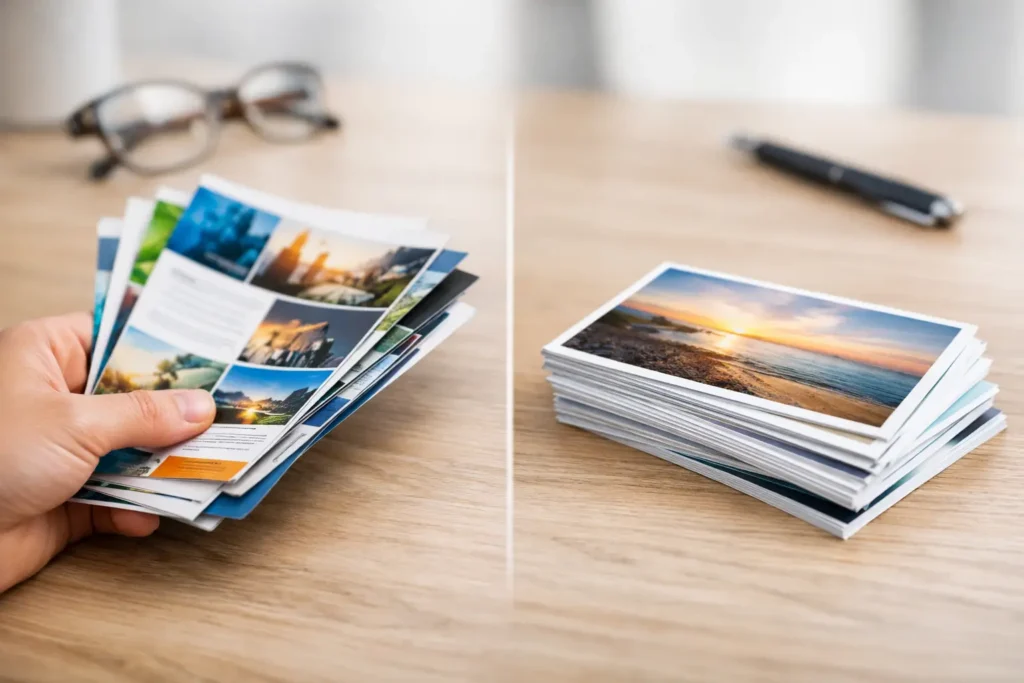
Flyers vs postcards marketing: the real difference
A flyer is built for detail. It gives you space to explain your offer, show multiple services, add pricing, list inclusions, or push a seasonal promotion with strong visuals. If you need to answer a few questions before someone acts, a flyer makes that easier.
A postcard is tighter and more direct. It usually works best when your message is simple, your branding is strong, and your call to action is obvious. Think grand opening, limited-time discount, appointment reminder, menu teaser, or a clean real estate message with one hero image and one clear next step.
That’s the big split. Flyers are better when more information helps the sale. Postcards are better when less information makes the message land faster.
Neither format wins every time. The better option depends on what you’re selling, how people receive it, and whether your campaign needs education or instant recognition.
When flyers are the smarter move
Flyers shine when your audience needs context before they commit. If you’re promoting multiple services, introducing a new business, or trying to explain value beyond just price, extra space helps. You can include before-and-after images, opening hours, service areas, package options, testimonials, or a stronger brand story without everything feeling cramped.
That makes flyers a strong fit for trades, beauty businesses, gyms, community events, takeaway venues, schools, local clubs, and service-based businesses trying to build awareness. A flyer can do more heavy lifting on its own. If someone sees it on a counter, in a bag, on a noticeboard, or in a letterbox, it has a better chance of answering the “What do you actually do?” question straight away.
There’s a trade-off though. More space doesn’t automatically mean better marketing. Plenty of flyers fail because they try to say everything at once. Too much copy, too many fonts, too many offers, and no clear hierarchy. If your message gets messy, the extra room becomes a problem.
Good flyers are structured, not stuffed. One strong headline, one core offer, simple supporting details, and a clear action. If your design looks like hard work, people won’t work hard to read it.
When postcards do a better job
Postcards are great when speed matters. They’re punchy, easy to scan, and usually feel less like a wall of sales copy. That matters in direct mail, handouts and event promotions where attention is short and the message needs to land in seconds.
If you’ve got a simple offer, postcards often outperform more detailed pieces because they remove friction. One discount. One announcement. One event date. One property. One QR code. One phone number. Clean and direct.
They also tend to feel more premium than people expect. A well-designed postcard on sturdy stock has a nice hand-feel and can stick around on a desk, fridge or reception counter longer than a flyer that gets folded or binned. For brands with strong visuals, that matters.
Real estate is the obvious example. A postcard with one standout image, agent details and a clear local message can work brilliantly. The same goes for hospitality launches, salon promos, retailer sales and short-run event marketing. If the creative is sharp, a postcard can feel confident without trying too hard.
The downside is obvious too. You don’t get much room. If your offer needs explanation, postcards can undersell it. Cram too much onto one and it stops looking clean, which defeats the whole point.
Flyers vs postcards marketing for local campaigns
Local area marketing is where both formats earn their keep, but for different reasons. If you’re blanketing a suburb and introducing your business for the first time, flyers usually have the edge. You can explain who you are, what you offer, where you service, and why locals should trust you.
If people already know your name, postcards can be stronger. They’re ideal for reminders, repeat promotions and short, high-impact campaigns. A pizza shop dropping a weekly special doesn’t need a full explainer. A postcard can do the job with a tasty image and one offer that’s easy to remember.
For tradies, it depends on the goal. A plumber or electrician trying to stay top of mind after a job might use postcards well. A landscaping or pest control business explaining broader services may get more from flyers. If your service range is wide, a flyer helps. If your pitch is simple, postcards are often cleaner.
This is also where print quantity and distribution matter. Letterbox drops favour quick readability. Counter displays and handouts can support more detail. Event bags and expo tables often benefit from flyers because people expect something they can scan later.
Cost, waste and return
A lot of buyers ask which option is cheaper. Fair question, but raw print cost is only half the story. The better question is which format gives you the best chance of response for the campaign you’re running.
Postcards can be cost-effective because they’re smaller and simpler, especially when the design is built around one message. Flyers may cost more depending on size, paper stock and finishing, but they can save you from needing extra printed pieces if one sheet can carry the whole message.
Waste usually comes from mismatch, not format. A postcard is wasteful if your customer needs more info before acting. A flyer is wasteful if your offer is so simple that half the page adds no value. That’s why campaign intent matters.
Short version – don’t choose by unit price alone. Choose by how much information your customer actually needs before they call, book, scan or visit.
How to choose without overthinking it
If your offer needs explanation, go with flyers. If your message can fit into one sharp headline and one obvious next step, postcards are probably the better play.
If you’re promoting a menu, a service list, an event program, or multiple packages, flyers make life easier. If you’re pushing a flash sale, a launch, a listing, or a simple local offer, postcards keep things tight.
Design confidence matters too. Brands with strong visuals and discipline often do well with postcards because they can say more with less. Businesses still building recognition may benefit from the added room flyers provide.
And yes, sometimes the answer is both. A flyer can work as the detailed leave-behind, while a postcard handles the quick-hit reminder. That combo makes sense when you’re building awareness over time rather than relying on one touchpoint to do all the work.
What makes either format actually work
Print format helps, but execution decides everything. Whether you choose a flyer or postcard, your message needs to be obvious at a glance. People should know what you offer, who it’s for and what to do next within a few seconds.
That means a strong headline, clean layout, readable type, and one main call to action. Not three. Not five. One.
Image quality matters as well. Cheap-looking visuals make your business look cheap, even if your service is excellent. The same goes for flimsy stock, muddy colours and cluttered artwork. Good print doesn’t just look better. It makes people trust the business behind it.
That’s why businesses ordering promo print under pressure usually want three things – sharp quality, fast turnaround and support when artwork needs a second set of eyes. Fair enough. You’ve got enough to juggle without chasing printers for updates or fixing preventable mistakes yourself.
Sticker Ninja gets that. If you need custom flyers that look clean, feel professional and arrive fast, there’s no point making it harder than it needs to be.
The best format is the one your customer actually reads, remembers and responds to. Start there, keep the message tight, and let the print do its job.