
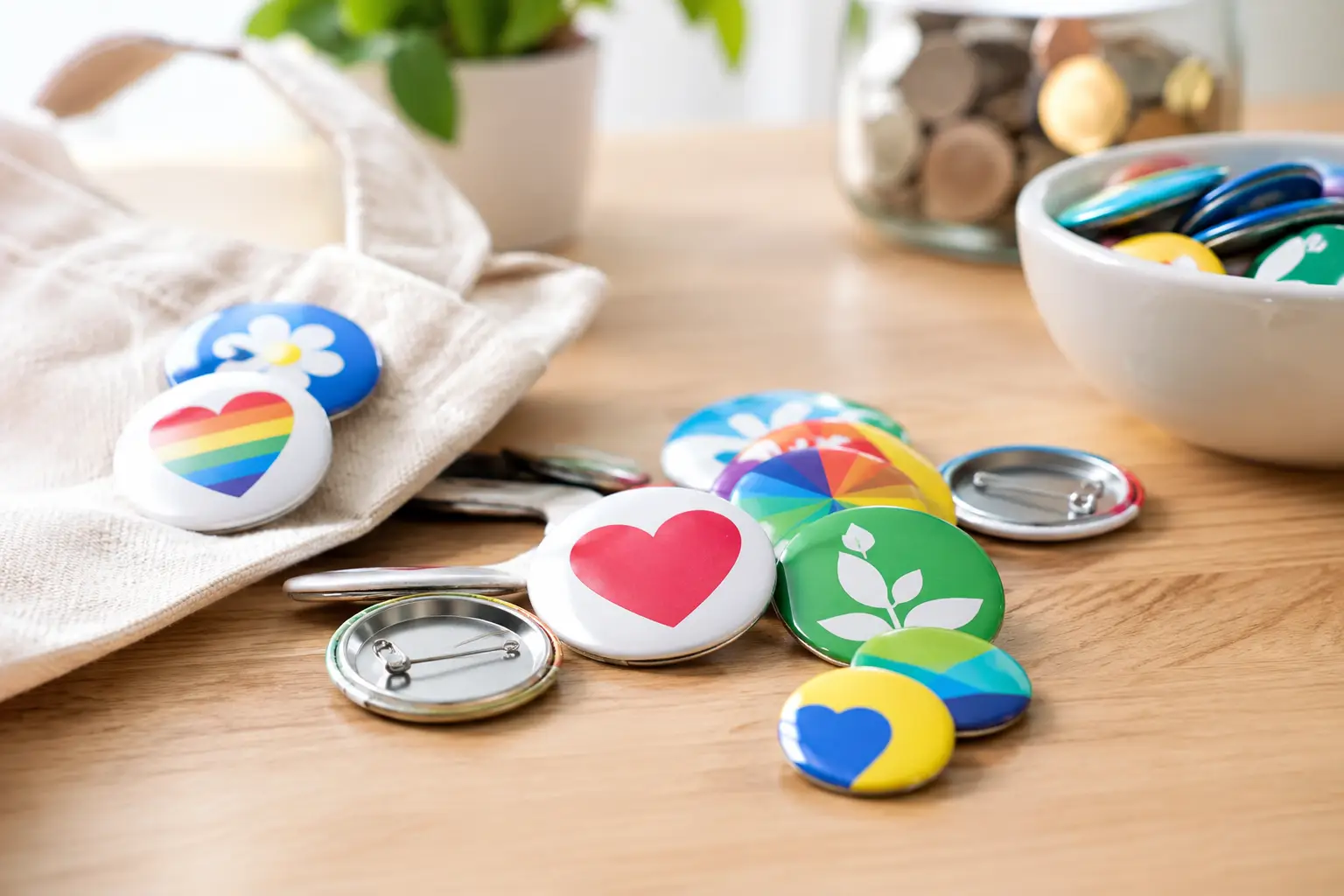
A gold-coin donation is easy to forget. A bright button badge pinned to a jacket, school bag or lanyard keeps your cause in view long after the sausage sizzle wraps up. That is why the best button badges for fundraisers do more than look good: they give supporters a simple, affordable reason to contribute and something they are genuinely happy to wear.
For schools, sporting clubs, charities, community groups and local events, badges are one of the smartest little fundraisers going. They are low-fuss to sell, easy to carry and quick for volunteers to hand over at a stall. Get the design, size and selling plan right, and a small printed product can build both funds and visibility.
What makes button badges work for fundraising?
A fundraiser needs a product with a clear value exchange. People are more willing to hand over cash when they receive something in return, particularly something that signals support for a team, person, cause or shared moment. A badge does exactly that without asking supporters to spend big.
It also suits the real world of community fundraising. Volunteers can keep badges in a tin or small box. They do not need sizing, complicated stock counts or a table full of products. A badge is simple: choose one, make a donation or pay a set amount, pin it on.
The strongest badge campaigns create a little sense of belonging. Think a school house colour at a fun run, a club badge for a junior finals day, a memorable line for a cancer fundraiser, or a cheerful design supporting a mate doing a charity challenge. When the design feels specific to the occasion, it becomes a keepsake rather than just another promotional item.
Choosing the best button badges for fundraisers
There is no one badge that fits every cause. The right option depends on where you will sell it, who is likely to wear it and whether the badge is meant to be a memento, a membership marker or a quick donation incentive.
Start with the message, not the artwork
Before anyone opens a design file, decide what the badge needs to say in one glance. Fundraising badges usually work best when they have one clear job. It might be encouraging people to support a cause, identifying event volunteers, celebrating a milestone or giving donors a small thank-you.
Avoid trying to fit a full event programme onto a circle. Long names, several sponsor logos, tiny social handles and paragraphs of copy can turn into visual mush at badge size. A short campaign name, bold illustration or recognisable logo will nearly always land harder.
If your fundraiser has a serious purpose, that does not mean the badge has to look sombre. A warm colour palette, a strong symbol or a line with personality can make people more likely to wear it. Just make sure the tone respects the cause and the people it supports.
Pick a size people will actually wear
Medium button badges are often the all-rounder for fundraising. They give your logo, text or artwork enough room to be readable while remaining comfortable on a shirt, jacket, tote bag or lanyard.
Larger badges are a good call when the design relies on a photo, bold artwork or a bigger statement. They stand out at busy events and work well as a premium option. Smaller badges can be fun for multi-badge sets, kids’ events and subtle branding, but they leave less room for detail.
If you are selling to a mixed crowd, keep wearability front of mind. A badge that looks great on a volunteer’s cap but feels oversized on a school uniform may not move as quickly. When in doubt, choose a practical middle size and let the artwork do the talking.
Use colour with purpose
Fundraising stalls are busy places. Your badge may be competing with raffle tickets, baked goods, footy jerseys and a crowd of people in a hurry. High contrast gives it a fighting chance.
Use dark text on a light background or light text on a dark background. Keep your key message large. If you are using a charity or club logo, give it breathing room rather than shrinking it into a corner. Bright colour can help, but only if it fits your organisation and remains easy to read.
Photos can work, especially for memorial events, pet rescue campaigns or a candidate-style community drive. The trade-off is that photos need to be sharp and well lit. A dark, blurry image might look passable on a mobile screen but can lose impact once printed small. Use a clean, high-resolution image and avoid placing important facial details right near the edge.
Sell badges as part of the event experience
The easiest badge to sell is one people see other people wearing. Get badges onto organisers, volunteers, performers and early supporters before the doors open. This creates instant social proof and makes the product feel like part of the day, not an afterthought on the side of the table.
Set a clear price or donation suggestion. For example, a simple sign can say, “Badges $3 – every dollar supports the new playground” or “Donate $5 and wear your support.” Specific wording helps people decide quickly, especially when volunteers are serving a queue.
Bundling can lift your total without making the offer complicated. Pair a badge with a raffle ticket, a cupcake, an event entry or a sticker for a modest combined price. This works particularly well at school fetes, markets and sporting days, where supporters are already making small purchases.
For a campaign running over several weeks, consider a small badge series. Different colours, mascot expressions, player numbers or campaign messages encourage repeat purchases and give collectors a reason to come back. Keep the set manageable, though. Four strong designs are usually better than 12 designs that split your budget and attention.
Order quantities without getting stuck with leftovers
Badge fundraising is a numbers game, but it should not feel like a punt. Start with your expected attendance, then estimate how many people are likely to buy. A school event with 300 attendees will not necessarily need 300 badges, because families often purchase together and not every visitor is there to spend.
For a first-time campaign, a conservative order is often the sensible move. You can create urgency with a limited run, reduce the chance of unused stock and learn what your audience likes. If your club has a strong regular following or the badge doubles as a membership item, ordering more can improve your per-unit value and keep stock available after the event.
Build in a few extras for volunteers, sponsors, speakers and surprise supporters. Nothing feels worse than selling out before the main crowd arrives, unless you have a clear way to take follow-up orders. On the other hand, do not order thousands simply because the unit price looks tempting. Cheap stock is only a bargain if it sells.
Make the artwork easy for your printer to produce
Clean files make for cleaner badges and fewer last-minute dramas. Use crisp logos, avoid screenshots where possible and check that any text is readable at the final badge size. If you are creating artwork in Canva or another design platform, export at high quality rather than sending a tiny compressed image from a group chat.
Keep crucial text and faces away from the outer edge. Button badges are circular, and anything placed too close to the rim can feel cramped or be lost in the finished shape. A simple centred design with a safe margin is not boring – it is reliable.
If your group has never ordered custom print before, do not guess your way through the artwork. A responsive proofing process is worth its weight when the campaign date is fixed and the committee has already approved the design. Sticker Ninja makes custom print in Australia without the usual runaround, which is exactly what a deadline-driven fundraiser needs.
A badge worth pinning on
The best fundraising badge gives people a small way to say, “I’m part of this.” Make it clear, make it wearable and put it where supporters can see it. A well-made badge may be a modest item, but it can keep your cause travelling through school gates, clubrooms, offices and weekend markets long after the collection tin is packed away.