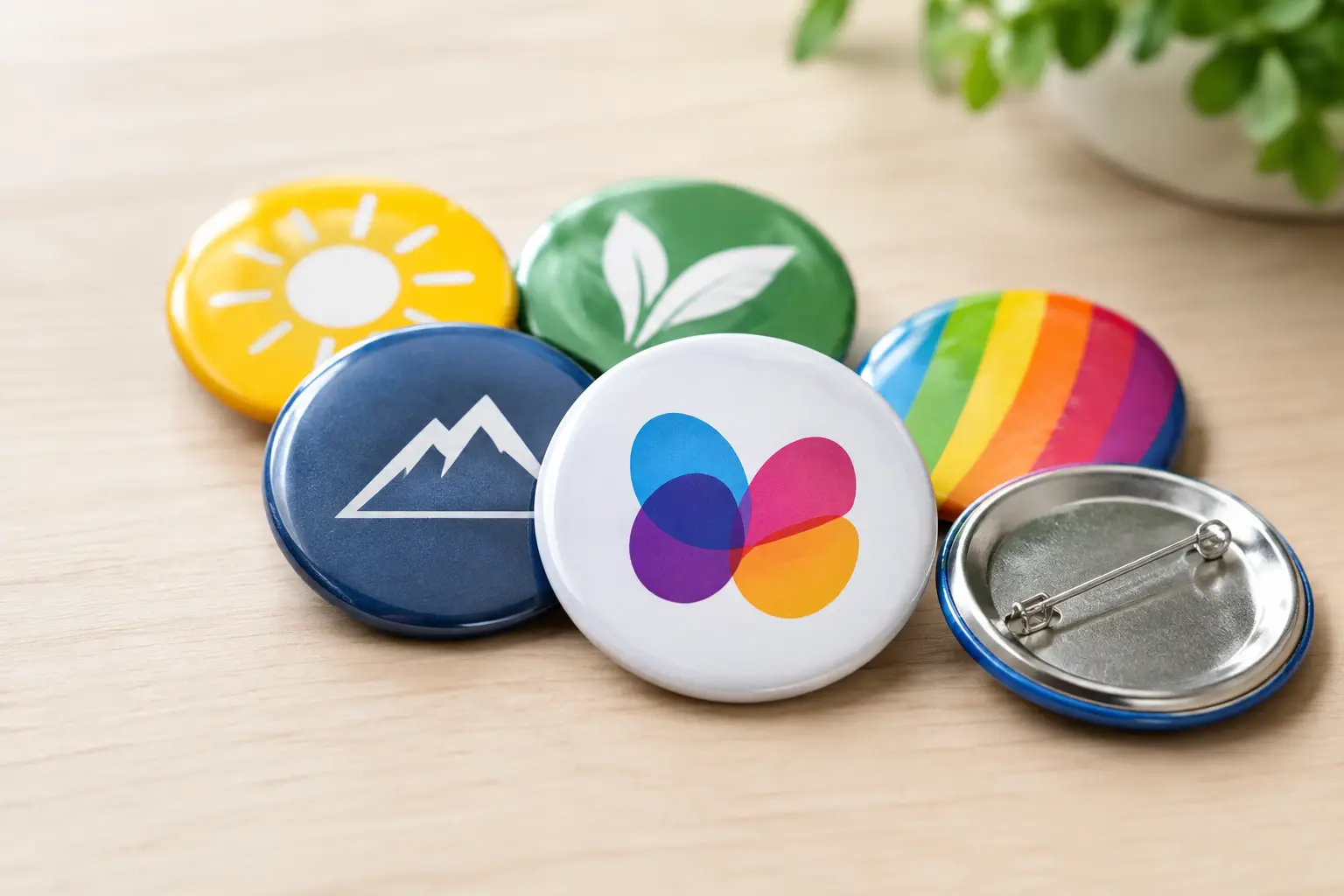
A great badge earns its spot on a jacket, lanyard, tote bag or high-vis vest. It gets noticed in a crowded expo hall, starts a chat at a fundraiser, and gives people a simple way to show they belong. That is why button badges remain one of the smartest low-cost promotional products around – provided the design is clear and the message is worth wearing.
For businesses, clubs, schools and event crews, a badge is more than a small piece of print. It is a portable signal. Your logo, slogan, artwork or campaign can travel from the registration desk to the pub, the office and the weekend market without asking anyone to carry a brochure around.
Why button badges still work
Digital advertising disappears with the next scroll. A button badge is physical, personal and visible in the real world. People choose to pin it on, which makes it feel less like an ad and more like a tiny piece of their identity.
That matters when you are building team spirit, launching a local campaign or putting on an event where attendees need an easy conversation starter. A bright badge can also do practical work: identify volunteers, distinguish staff from guests, mark a milestone or give ticket holders a small keepsake that does not end up forgotten in a drawer.
The value is in the combination of reach and cost. You can order enough for a busy market day, a sporting club presentation, a school fundraiser or a nationwide brand activation without blowing the promotional budget. But cheap does not have to look cheap. A sharp print, clean artwork and a properly chosen size make all the difference.
Start with one message people can read
The best badge designs do not try to say everything. A badge has limited room, so treat it like a billboard viewed from a few steps away. Your business name, event title, punchy slogan or bold illustration should be obvious at a glance.
If your logo includes fine type, long taglines or multiple small details, it may look brilliant on a website and muddy on a 25 mm badge. Simplify it. Use the strongest element of your brand mark, shorten the copy and give the design some breathing room. The edge of a round badge is not the place for crucial text, because the curve can make small lettering feel cramped.
High contrast usually wins. Dark text on a pale background, pale text on a dark background, or a bright colour paired with black can read quickly across a room. That does not mean every design needs to be loud. For a wedding, memorial or premium retail launch, restrained colours and a simple monogram may be exactly right. The rule is clarity, not chaos.
Match the badge to the job
Size changes how a badge performs. Smaller badges suit simple logos, quick identifiers and designs people might wear in multiples. Mid-sized badges are the flexible all-rounder for brand marks, short messages and event artwork. Larger badges give illustrations, bold campaign lines and detailed designs more room to breathe.
Think about where the badge will be worn, too. A real estate team using badges at inspections may prefer a neat, professional design that sits cleanly on a shirt or blazer. A music event can go bigger and bolder. A trade business handing them out at a local show might use a tough logo, strong contrast and a line that makes people smile.
Round badges are familiar for a reason: they are versatile and instantly recognisable. If your artwork has an unusual shape or relies on a wide layout, do not force it into a circle. Adjust the artwork first so it looks intentional, rather than squeezed.
Make your artwork print-ready without making it painful
You do not need to be a designer to create a cracking badge. You do need to start with the best artwork available. A high-resolution file keeps logos, photos and type looking crisp. Blurry screenshots, tiny images lifted from social media and heavily compressed files can print soft, especially when fine details are involved.
Where possible, use original logo files and keep the key content away from the outer edge. If you are adding text, choose a typeface that remains legible at a small scale. Script fonts and ultra-thin lettering can look great on screen but disappear once reduced. If someone needs to squint to read it on your mobile, it needs simplifying.
Photos can work beautifully for memorial badges, birthdays and special events, but they need enough contrast. Faces should be well lit, and the subject should fill the frame rather than sit as a tiny figure in a busy background. A simple coloured border or a short name and date can turn a photo into a keepsake people genuinely want to hold onto.
Proofing is your mate here. Check spelling, dates, phone numbers and social handles before approval. Look at the artwork at actual size, not only zoomed in on a large monitor. That quick check can save a lot of grief when you are ordering for a deadline.
Button badge ideas that do more than decorate
Badges work hardest when they give people a reason to wear them. For a café opening, that might be a cheeky line customers want on their denim jacket. For a charity fun run, it could be a participant badge that makes supporters easy to spot. For a business conference, colour-coded badges can help attendees find speakers, sponsors and crew without awkward guesswork.
Clubs and community groups can use them for membership, awards, fundraising and game-day merch. Artists can turn illustrations into affordable items for markets. Schools can make house badges, leadership badges or graduation keepsakes. And for birthdays, hens parties and reunions, the right design instantly makes the group feel like a group.
There is a trade-off between a badge that is purely branded and one people actually want to keep wearing. The strongest option often combines both. Put your logo on the back or work it into the artwork, then lead with a line, icon or design that has personality. Nobody needs another boring giveaway. Give them something that earns a place on their bag.
Order for the moment, not just the quantity
Before placing an order, count the people who will receive a badge, then add a sensible buffer for staff, late registrations, lost pins and the people who inevitably ask for one after seeing everyone else wearing theirs. Running out halfway through an event is frustrating. Ordering thousands for a tiny one-off gathering is not clever either.
Timing matters just as much. If badges are part of an event pack, allow room for artwork approval, production and delivery rather than leaving it until the week of the event. Fast turnaround helps when plans change, but it should be backup, not the whole plan.
For repeat campaigns, keep a clean master artwork file and note the colours, wording and size that worked. It makes the next order quicker, keeps your branding consistent and gives you room to test a new design without starting from scratch.
Sticker Ninja produces custom print for the people who do not have time for print-shop runaround. Whether you are organising a fundraiser, promoting a new business or getting a crew ready for a big weekend, the goal is simple: make the badge look sharp, make it easy to wear and make people want to take it with them.
A button badge may be small, but that is part of its power. Give it one clear job, a design with some guts and a message people are happy to pin on. The right badge can keep your name moving long after the event pack has been unpacked.